


Plastic Chip Trays and Chip Boxes: Essential Tools for Geological Sampling and Sustainable Mining
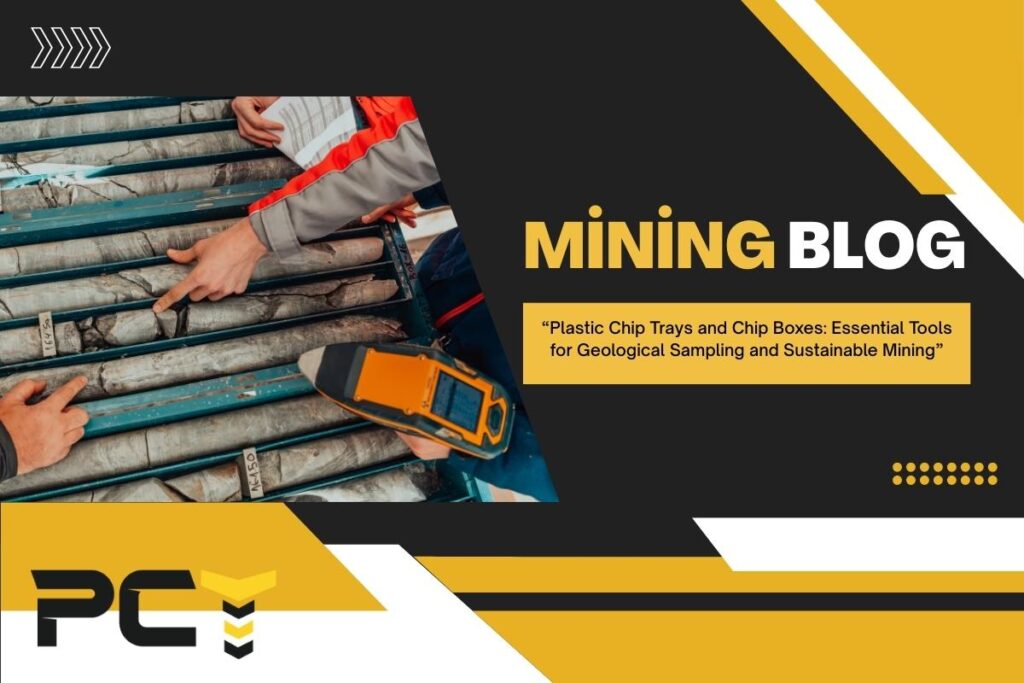
In the mining industry, accurate sampling is the foundation of every successful exploration and production project. Whether the goal is to identify new mineral deposits, assess grade distribution, or plan long-term extraction strategies, reliable samples are non-negotiable. Traditionally, diamond drilling produces solid cores that are stored in plastic core trays, but when it comes to reverse circulation (RC) drilling, the results are very different. Instead of cylindrical core, RC drilling generates fragmented rock chips. These chips are stored, transported, and catalogued using plastic chip trays or chip boxes.
Though simple in appearance, chip trays play a crucial role in preserving geological integrity. Without them, samples could be lost, contaminated, or mislabelled, leading to costly errors in exploration and resource evaluation. This article explores the importance of plastic chip trays and boxes in mining, their benefits compared to older materials, and how they support sustainability, efficiency, and accurate decision-making in the field.
The Role of Chip Trays in Mining Exploration
Plastic chip trays are designed to store small, crushed samples from RC drilling. Each tray is divided into multiple compartments, typically representing 1-meter or 2-meter drilling intervals. When organized sequentially, the trays provide a depth-by-depth visual record of the subsurface geology. Geologists can easily examine mineral content, alteration zones, and lithological changes at a glance, even without intact core.
In many exploration programs, chip trays are used alongside core trays. While plastic core trays hold continuous cylindrical cores, chip boxes complement them by capturing RC samples. Together, they form a complete sample archive, ensuring no geological data is lost regardless of drilling method.
This integration is essential because mining projects often use both techniques: diamond drilling for high-resolution data and RC drilling for faster, cost-effective coverage. Chip trays thus ensure that every fragment of geology has a proper place in the record.
Why Plastic Trays Have Replaced Wood, Metal, and Cardboard
Historically, sample trays were made of wood, galvanized metal, or wax-coated cardboard. While functional, each of these materials presented challenges:
-
Wooden trays were heavy, prone to splinters, and vulnerable to termites and rot.
-
Metal trays were durable but could become dangerously hot or cold in extreme climates and sometimes contaminated sulphide samples.
-
Cardboard trays were cheap and lightweight but collapsed easily under weight or exposure to moisture.
Plastic chip trays and boxes have become the industry standard because they eliminate these weaknesses. Today, high-impact polypropylene is the preferred material for both chip and core trays. It is lightweight, durable, UV-resistant, water-resistant, and recyclable, offering unmatched performance in harsh mining environments.
Advantages of Plastic Chip Trays and Boxes
1. Durability and Longevity
Plastic trays are engineered to endure rough handling, transportation, and extreme weather. They resist cracking, bending, or warping even under heavy loads. Unlike cardboard, they do not lose structural integrity when exposed to rain or humidity.
2. UV and Chemical Resistance
Fieldwork often means leaving samples exposed to direct sunlight and environmental chemicals. High-quality plastic trays are resistant to UV degradation and chemical corrosion, ensuring samples remain uncontaminated and tray life extends to decades.
3. Stackability and Space Efficiency
Plastic chip trays are designed to nest when empty and stack securely when full, saving space during storage and transport. This feature is critical for exploration camps where space is limited.
4. Ease of Labelling and Tracking
Smooth surfaces allow permanent markers or stickers to be applied, and some trays even feature recessed areas for labels. This enables precise sample identification and traceability, reducing the risk of mix-ups.
5. Lightweight Handling
Compared to wood or metal, plastic trays significantly reduce handling effort. A single technician can move trays without strain, lowering the risk of injury and improving efficiency on site.
6. Sustainability
Many modern trays are made from recycled plastic, helping reduce environmental impact. Their longevity also means fewer replacements, lowering overall material consumption.
How Chip Trays Support Sample Integrity and Exploration Success
Sample storage may appear minor compared to drilling itself, but its influence is immense. Consider these scenarios:
-
Poor-quality trays can crack or collapse, leading to sample loss that forces costly re-drilling.
-
Incorrect labelling can compromise years of geological work if assay results cannot be matched to the right depth.
-
Unprotected samples may degrade, especially under UV or moisture exposure, undermining data reliability.
Plastic chip trays and boxes prevent these issues by providing a secure, consistent, and organized method of managing samples. They ensure that geological teams can confidently log, photograph, and archive every interval without fear of contamination or loss.
In practice, chip trays serve not only as field tools but also as permanent archives. Many mining companies keep chip trays for the life of a project, allowing geologists and auditors to revisit samples years later for validation, training, or additional studies.
Chip Trays and Digital Integration
The mining industry is rapidly moving towards digital workflows. Core and chip photography, digital logging, and 3D geological modeling all rely on accurate physical samples. Plastic chip trays support this transition by:
-
Providing consistent, compartmentalized layouts that are easy to photograph and digitize.
-
Allowing integration with core imagery software for depth alignment and lithology recognition.
-
Enabling geologists to link digital records to physical samples with precise confidence.
This synergy between physical storage and digital tools highlights why chip trays remain a cornerstone of exploration logistics in a modern, data-driven industry.
Sustainability and ESG in Sample Storage
Environmental, Social, and Governance (ESG) standards are reshaping mining. Stakeholders demand lower emissions, reduced waste, and sustainable supply chains. Sample storage is no exception.
By using plastic chip trays manufactured from recycled materials, mining companies demonstrate commitment to sustainability without compromising efficiency. Some producers also power their manufacturing with renewable energy, reducing the carbon footprint of every tray produced.
This shift is more than symbolic. It aligns with broader industry goals of green mining, where every part of the supply chain, from drilling equipment to storage solutions, contributes to environmental responsibility.
Practical Applications in the Field
Plastic chip trays are widely used in:
-
Exploration camps for daily drill sample storage.
-
Core sheds where long-term archives of geological data are maintained.
-
Transport logistics, as trays can be palletized and shipped globally with minimal damage.
-
Laboratory preparation, where samples are visually inspected before detailed analysis.
In each of these stages, chip trays protect the integrity of geological data. The result is greater confidence in exploration outcomes, lower project risk, and more efficient workflows.
Conclusion
Plastic chip trays and chip boxes are far more than simple containers. They are essential tools in modern exploration and mining, ensuring that every rock fragment is preserved, labelled, and stored safely for analysis. Their durability, stackability, and sustainability make them indispensable in both field operations and long-term archives.
As mining continues to evolve toward digitalization and sustainability, plastic chip trays will remain at the heart of exploration logistics. For geologists, drillers, and mining companies alike, investing in high-quality trays is an investment in data integrity, operational efficiency, and responsible resource management.