


How to Choose the Right Core Tray for Your Drilling Project: NQ, HQ, PQ, or BQ?
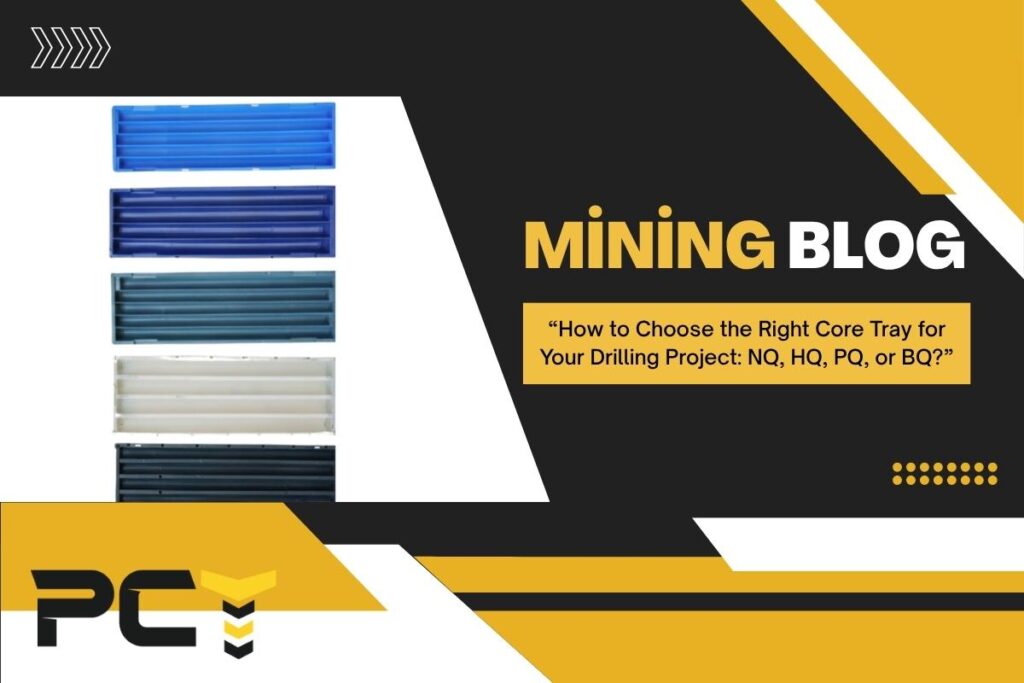
Selecting the proper core tray is a crucial decision in any drilling or mining project. Core trays (also called core boxes) are essential geological sampling tools used to store and transport the cylindrical rock core samples obtained during drilling. Choosing the wrong tray size or material can lead to damaged samples, wasted money, and unreliable geological data. So, how do you know whether to use an NQ, HQ, PQ or BQ core tray? In this comprehensive guide, we’ll provide a core tray size comparison and walk you through everything you need to consider – from understanding what those size codes mean to evaluating plastic vs wooden core trays – so you can confidently select the best core tray for mining or exploration projects.
What Are NQ, HQ, PQ, and BQ Core Trays?
In the drilling industry, core sizes are standardized by a letter code system (the Q-series developed by Boart Longyear) ranging from A (smallest) to P (largest). The letters BQ, NQ, HQ, PQ correspond to specific core diameters and tray specifications:
-
BQ Core Trays (Smallest Size): Designed for BQ-size core (about 36.5 mm core diameter). A BQ core tray typically has six narrow rows to accommodate the smaller core, holding roughly 6 meters of core per tray. BQ is often used in early-stage exploration or very deep holes where a smaller core is more cost-effective and lighter to drill. These trays are compact and efficient for preliminary sampling and where drill rig power or budget is limited.
-
NQ Core Trays (Standard Exploration Size): Built for NQ-size core (~47.6 mm core diameter). An NQ tray usually contains five rows, fitting about 5–6 meters of core per tray. NQ is one of the most common core sizes in mineral exploration – it offers a good balance between sample size and drilling efficiency. In an NQ core tray vs HQ core tray comparison, NQ trays hold slightly more length of core (because the core is smaller in diameter) and are a bit shallower in compartment depth. NQ core trays are popular for gold and base metal exploration where moderate sample volume and depth capability are needed.
-
HQ Core Trays (Larger Diameter): Made for HQ-size core (~63.5 mm core diameter). An HQ tray typically has four rows and holds about 4 meters of core per tray. Because HQ core is larger and heavier, the tray’s compartments are deeper and wider to protect the cores. HQ drilling is often chosen for broken or fractured ground where the larger core diameter can improve recovery. These trays are ideal when you need more sample material for structural geology observations or core tray size comparison shows NQ is too small for the project’s requirements.
-
PQ Core Trays (Largest Size): Built for PQ-size core (~85 mm core diameter). A PQ tray usually has three deep rows, fitting about 3 meters of core per tray. PQ cores provide the maximum sample size – often used for metallurgical testing, bulk sampling, or when extremely high core recovery is required. The trays for PQ are correspondingly larger and sturdier to handle the extra weight. They are used in specialized situations, such as capturing large intact samples for lab analysis or when an operation needs the absolute best core recovery rate despite higher drilling costs.
![Empty blue plastic BQ-size core tray with six rows for small-diameter core samples.] Example of a BQ plastic core tray. BQ trays have the most rows (six) because BQ cores are smallest in diameter, whereas PQ trays have the fewest (three rows) to accommodate much larger cores. In summary, the core tray size must match the drill core size: using the correct NQ, HQ, PQ or BQ tray ensures your samples fit snugly and are well-supported. A quick core tray size comparison reveals that as core diameter increases from BQ to PQ, the number of core rows per tray decreases and the overall tray depth increases.
Factors That Influence Core Tray Selection
Choosing a core tray isn’t only about core diameter. Several project-specific factors determine which tray size and material will work best. To understand how to choose a core tray for your situation, consider the following:
-
Geological Conditions (Rock Type & Structure): The rock you are drilling into can influence core size and tray choice. Hard, competent rock might allow smaller core sizes (NQ or BQ) because recovery is easier, whereas highly fractured or crumbly formations often require larger diameters (HQ or PQ) to improve core recovery. If the core is likely to break into pieces, a larger core and a suitably sized tray will help preserve those pieces in order. Additionally, abrasive or reactive rock types won’t affect a plastic tray (chemically inert), but could potentially degrade wooden trays (for example, acidic sulfide-rich core might corrode metal fittings or rot wood).
-
Drilling Depth and Hole Design: Deeper drill holes commonly use smaller core sizes (like NQ or even BQ) in the later stages, because smaller diameter rods encounter less friction and weight. This means you might start a hole in HQ size near surface and then reduce to NQ at depth – requiring both HQ and NQ trays. Plan for what core sizes your drilling program will produce at different depths. If you anticipate a depth change, ensure you have trays for each size. Deeper projects also mean more total core, so consider tray weight and stackability when choosing material (hundreds of heavy wooden boxes vs lightweight plastic can make a difference when carrying them out of a remote site).
-
Climate and Weather: The environment of your project plays a role. In very cold climates (alpine or arctic conditions), wooden core boxes have traditionally been used because they can withstand freezing temperatures without becoming brittle. However, high-quality plastic trays today are engineered to handle extreme cold and heat (for instance, durable plastics that remain stable from -50°C up to 60°C). Wet or humid climates can wreak havoc on wooden trays (causing rot or mold), whereas plastic trays are waterproof and won’t degrade. If your cores will be left under a hot sun, look for plastic trays with UV stabilizers so they don’t crack or become brittle over time. Metal trays can get extremely hot to touch in sunny, tropical climates and might not be safe without gloves.
-
Transportation and Handling: How will the core trays be moved and stored? If your project is in a remote area where cores might be flown out by helicopter or carried long distances, the weight of the tray becomes critical. Plastic core trays are lightweight compared to wood or metal, making them easier and safer to handle in large quantities. Also consider tray design for handling: some plastic trays have handles or comfortable grips molded in, whereas metal trays may have sharp edges and wooden boxes often require careful lifting due to weight. If using forklifts or pallets, check that the trays stack securely (some trays are designed to interlock when stacked, preventing slips during transport).
-
Long-Term Storage and Stackability: Will the cores be archived on site for years? If so, durability and stackability are key. Storing core involves stacking trays, sometimes to great height in a core shed or even outdoors. Sturdy plastic trays usually stack evenly without warping, and many have features to aid stacking (ridges or slots that align trays above one another). Wooden boxes can deform or come apart if stacked too high, especially if the wood warps or nails loosen over time. Metal trays might bend if overloaded. Also, consider drainage – quality core trays (especially plastic ones) often include drainage holes so water doesn’t accumulate around the core; this is important if storing outdoors in rain. Trays left in the open must endure sun, rain, and possibly wildlife (insects, rodents) – plastic won’t rot or get eaten by termites, unlike wood.
-
Budget Constraints: Finally, cost will influence your decision. Wooden core boxes usually have the lowest upfront cost, and can sometimes be made on-site from local timber, but they may need frequent replacement (and don’t forget the labor cost of assembling or repairing them). Plastic core trays cost more per unit initially, but their longevity can make them cheaper over the life of a project – a one-time investment that can be reused across multiple drilling programs. Metal trays are often the most expensive option and are not commonly used unless specific conditions warrant it. Consider the trade-off: saving money now with cheap trays could result in damaged core or replacements later, whereas investing in robust trays protects the valuable core you drilled at great expense.
By evaluating these factors – from geology and depth to climate, handling, and budget – you can narrow down which core tray type and size will serve your project best.
Plastic vs. Wooden vs. Metal Trays: Which is Best?
One major decision is the tray material. The traditional wooden core box is still used in some regions, but plastic core trays have gained popularity worldwide. Metal trays also exist (usually aluminum or galvanized steel). Each material has pros and cons:
-
Plastic Core Trays: Durable, lightweight, and weather-resistant. Modern plastic trays (often made of HDPE or polypropylene) are extremely tough – they resist impacts if dropped and won’t rot or corrode. They are often UV-resistant for long sun exposure. Plastic trays are also lighter than wooden or metal ones, making them easier to carry and safer when lifting stacks of core. They typically come with molded features like interlocking edges for stable stacking and designated labeling areas. Another benefit is consistency in size and shape (every tray is identical, aiding neat stacking and transport). On the downside, plastic trays can be bulkier to ship in large numbers (since they don’t flat-pack like disassembled wooden boxes), and you are limited to the sizes/shapes the manufacturer produces. Overall, plastic trays are considered by many as the best core tray for mining projects due to their longevity and ease of use, especially in harsh outdoor conditions.
![Blue plastic core tray loaded with cylindrical rock core samples from drilling.] Plastic core trays are lightweight, weatherproof, and built to last, making them popular for drilling projects.
-
Wooden Core Boxes: Low initial cost and easy to fabricate, but heavy and prone to decay. Wood trays have been used for decades; they can be built in custom sizes and are useful in extremely cold environments where certain plastics might become brittle. They are relatively strong when new and their long, narrow shape (often a wooden box holds one row of core per box in some styles) can be carried on one’s hip fairly easily. However, wood is organic – it’s vulnerable to termites and insects, it will rot or mold if exposed to rain and humidity, and it may warp or fall apart over time (nails can loosen). Wooden boxes are heavier to lift, especially when filled with core and water (if cores are wet). Splinters and minor injuries are another hazard. Also, using a lot of timber has environmental impacts (deforestation concerns). Wooden boxes might be suitable for short-term projects or in a pinch, but consider the long-term costs: replacements, potential core loss from box failure, and storage issues. They require keeping cores in a dry shelter to avoid deterioration.
-
Metal Core Trays: Very strong and flame-proof, but heavy and can corrode or heat up. Metal trays, typically made of steel or aluminum, offer robustness – they won’t easily break and can handle rough handling and high stacking. They are not eaten by insects and won’t rot. In underground mines or areas where fire resistance is needed, metal has an advantage (plastic and wood are flammable to differing degrees). However, metal trays are hefty, making manual handling strenuous. If steel, they can rust if the paint or galvanization wears off, especially in humid climates or when exposed to drilling fluids. Aluminum trays avoid rust but are costly and can still bend under heavy loads. Additionally, under hot sun, metal trays become very hot to touch, and in cold they can freeze-burn skin. Metal also lacks the slight flexibility of plastic; a hard drop can dent or deform a metal tray permanently. Due to these factors, metal core trays are less common, but might be used in specialized situations (some companies have aluminum core boxes for certain projects). For most surface exploration needs, plastic or good-quality wood are preferred over metal due to weight and practicality.
Which is best? For most modern drilling projects, plastic core trays provide the best overall performance and lifespan. Unless extreme cold or a very tight budget pushes you toward wood, the durability and convenience of plastic trays usually outweigh the alternatives. That said, each project has unique needs – for example, a short one-off drilling job in a cool climate might justify simple wooden core boxes, while a major multi-year program with thousands of meters of core is better served by high-quality plastic trays that ensure the samples remain intact for years.
Common Mistakes in Core Tray Selection
Even experienced field crews can make mistakes when selecting or using core trays. Avoid these common errors that can compromise your core samples and data:
-
Choosing the Wrong Tray Size: One of the biggest mistakes is ordering the wrong tray dimensions for the core being drilled. For instance, an HQ core will not fit properly in an NQ tray – the slots will be too narrow or shallow, causing the larger core pieces to stick out and potentially break. Conversely, placing small BQ cores in an HQ tray means they’ll rattle around with too much empty space. Always match the tray type (BQ, NQ, HQ, PQ) exactly to your drill core size. If your project plans to change core size partway through drilling, you’ll need trays of each corresponding size. It’s wise to double-check the core diameter and tray specifications (slot width and depth) before purchasing, to ensure a proper fit.
-
Ignoring Environmental Exposure: Another mistake is not considering the field conditions in which trays will be used. Using untreated wooden trays in a tropical rainforest, for example, is asking for trouble – they may rot or get infested by insects within months, risking loss of valuable core. Similarly, using non-UV-stabilized plastic trays in an equatorial desert could lead to trays becoming brittle and cracking from intense sunlight. The climate and storage conditions should influence the tray material: choose weatherproof trays (plastic or suitably coated metal) if they will be stored outside, and ensure any plastic trays are UV-resistant for long sun exposure. If cores will be in cold/freeze conditions, ensure the material can handle it without embrittlement.
-
Overloading and Poor Stacking Practices: Core trays are designed to carry a certain amount of core and to be stacked in a stable way. A common error is overloading trays with more core than they are rated for or stacking them too high without proper support. This can lead to tray deformation (plastic trays might bow in the middle if unsupported and overloaded, wooden trays might crack or their bottoms fall out). Always respect the manufacturer’s guidelines for maximum core length per tray (e.g., don’t try to squeeze 7 meters of NQ core into a tray meant for 5 meters by piling pieces) and stack trays on a level surface. If stacking very high, use pallets or racking systems to support the weight, and consider strapping the trays together for stability. Ignoring these practices can cause the bottom trays to fail and cores to spill or mix up — a nightmare for sample integrity.
-
Insufficient Labeling and Organization: It’s easy to focus on the physical tray and forget about labeling and organizing them properly. A great tray selection can be undermined if you can’t identify the cores later. Common mistakes include not having a dedicated space or method for labeling each tray with drill hole ID, depth intervals, and orientation. Some people try to write on wood with markers that fade, or on plastic with pens that wash off. It’s important to use durable core tags or markings (like aluminum tags on wood, or paint markers on plastic that won’t fade). Choose trays that have a designated label area or include tag clips. Always label inside the tray as well (on a block or tag at the start of each row) – external labels can fall off. Without clear labeling, you risk mixing up core samples, which can lead to costly confusion in your geological data.
-
Cutting Costs with Low-Quality Trays: While managing costs is important, going for the absolute cheapest option can backfire. Flimsy plastic trays made of brittle or recycled material without quality control might crack under weight or in the sun. Poorly constructed wooden boxes could fall apart when wet. It’s a mistake to assume all trays are made equal – there are reputable suppliers and there are subpar ones. Research and choose trays that are proven in the field. Often the price difference to get UV-stabilized, high-impact plastic or properly treated wood is worth avoiding lost samples or injuries from broken trays. Remember, the money spent drilling each meter of core is significant; skimping on the device that holds those cores safe is not the place to compromise.
By being aware of these pitfalls, you can take steps to prevent them – such as ordering the correct mix of tray sizes in advance, selecting materials suited to your climate, training the team on safe stacking, and establishing a robust labeling system from day one.
How Plastic Core Trays (PCT) Simplify This Decision
Plastic core trays have become increasingly popular because they address many of the challenges mentioned above. Here’s how modern plastic core trays (often abbreviated as PCT) can make your tray selection (and overall core management) much easier:
-
Standardized Sizes and Exact Fit: Plastic tray manufacturers produce trays specifically molded for BQ, NQ, HQ, PQ core diameters with precise compartment dimensions. This means if you order a set of NQ plastic trays, you can be confident your NQ cores will fit perfectly with no wasted space or risk of jammed pieces. The consistency is high – every tray is identical – so you won’t encounter slight size variations that sometimes occur with hand-built wooden boxes. This takes the guesswork out of tray sizing and ensures a snug, protective fit for your cores.
-
Easy Stacking and Stability: Most plastic core trays are designed with stackability in mind. They often feature interlocking edges or grooves that allow trays to nest slightly or align securely when stacked. Some have reinforced bottoms or ribbing that not only adds strength but also helps distribute weight when trays are piled up. This design means you can stack trays higher and safer, whether in the field or in a core storage facility, without worrying about toppling stacks or trays bending under pressure. By simplifying stacking, plastic trays enable more efficient use of space and easier transport (you can band them together on a pallet tightly).
-
Built-In Labeling and Organization: Good plastic trays incorporate practical features for core logging and inventory. For example, many have an integrated labeling strip or slot at one end where you can insert a waterproof label or write directly on a raised surface that won’t wear off. Some trays even come with pre-numbered intervals or measure marks to help geologists quickly mark depths on the core itself. Compared to a plain wooden box (where you have to figure out how to attach labels or dividers), plastic trays make it straightforward to keep track of which core goes where. This reduces errors and saves time when cataloging samples.
-
Durability and Longevity: PCT trays are engineered to withstand harsh conditions. They are made from high-impact plastics that won’t easily crack or break even if dropped or struck. Many are UV-stabilized, meaning they can sit outside in direct sun for years without significant degradation. They’re also impervious to water, oils, and chemicals commonly encountered in drilling (drilling fluid, diesel, etc.), so they won’t weaken or fall apart due to exposure. Their durability translates to a long service life – you can reuse the same trays for multiple drill programs over many years. This longevity simplifies procurement decisions (fewer re-orders needed) and can lower long-term costs.
-
Sustainability and Economic Benefits: Modern plastic core trays aren’t just about convenience; they’re also contributing to sustainability in the field. Unlike disposable timber boxes, quality plastic trays can be reused indefinitely, reducing waste. Some manufacturers now produce trays from recycled plastics and even power their production with renewable energy. (For instance, one producer has highlighted that over 10 million plastic core trays are made each year using recycled material and solar-powered facilities.) Moreover, because plastic trays are lighter, transporting them (whether shipping to remote sites or hauling core out) consumes less energy than heavier wood or metal options – a subtle but meaningful benefit over the life of a project. From a practical standpoint, being able to rely on a durable product means fewer interruptions; you won’t need to pause operations to replace broken trays or re-box core, which improves overall project efficiency.
![Infographic stating that 10+ million plastic core trays are produced sustainably each year using renewable energy and recycled materials.] Sustainability in core trays: Many plastic core tray suppliers emphasize eco-friendly practices, such as using recycled materials and renewable energy in manufacturing. Plastic trays also help reduce deforestation by offering a long-lasting alternative to wooden boxes.
In short, plastic core trays simplify the decision-making process by providing a reliable, one-stop solution: you get the exact sizes you need, a product that can handle any environment, and features that make life easier for geologists logging the core. The initial investment in PCT pays off in saved time, preserved samples, and peace of mind that your core collection is well protected.
Tray Size and Core Recovery Rate: What’s the Connection?
You might be wondering how the choice of core tray actually impacts your drilling results. While the tray itself doesn’t improve how much core you cut, using the correct tray size is closely tied to maintaining a high core recovery rate and sample quality. Here’s why:
When drilling in difficult conditions (like highly fractured rock or crumbly soil), a larger core size (HQ or PQ instead of NQ, for example) often yields better core recovery. This is because a thicker core is more likely to stay intact during drilling and retrieval. If you decide to drill a larger core to improve recovery, you must have the appropriately sized trays to handle those larger core pieces. Using an undersized tray would force you to break or trim the core to fit, destroying the whole purpose of drilling larger core! Thus, committing to a larger core size means also choosing HQ or PQ trays so that every piece of recovered core can be laid out gently, in order, without further breakage.
Even for competent rock, consider that core samples are heavy and fragile; if they don’t sit properly in a tray, they can crack under their own weight or when moved. For example, placing long sticks of PQ core in a tray that’s too shallow would leave them inadequately supported – the core might wobble or bend if the tray flexes, leading to breaks. This would lower your effective recovery (you might have collected the core, but if it snaps in handling, you lose a continuous piece). The correct tray ensures the core is fully seated and supported along its length, preserving those valuable continuous sections. High recovery isn’t just about drilling technique, but also about how you handle and store the core afterward.
Tray selection also affects data accuracy and geological logging. Good recovery means nothing if the core pieces get mixed up or their orientation is lost. By using the right tray, each piece of core can be placed in sequence as it came out of the ground. Trays with well-defined rows and divider blocks help keep the footage in order. If you attempt to cram core into an incorrect tray, pieces might overlap or slide out of sequence. This confusion can lead to misinterpretation of the geology or even incorrect assay intervals. In contrast, a properly sized tray keeps everything organized: geologists can clearly see the entire core, measure fractures, and mark features without disturbance. The result is reliable geological data and confidence in the core logging process.
Finally, consider the psychological and safety aspect: when workers have the right tools (in this case, properly fitting trays), they tend to handle the core more carefully and efficiently. Struggling with ill-fitting boxes or broken trays is frustrating and can lead to mistakes or even injuries. A well-thought-out tray choice streamlines the workflow of extracting core, laying it in the tray, and transporting it. This means your team can spend more time focusing on maximizing core recovery and quality, rather than dealing with container issues.
In summary, selecting the correct tray size and material goes hand-in-hand with achieving high core recovery rates and maintaining the integrity of your samples. It’s an often overlooked but vital link in the chain from drilling to data. If you’ve invested in drilling the core, investing a bit of effort to choose the right core tray ensures that core (and all the information it contains) is preserved from the moment it comes out of the ground until the analyses are complete.
Conclusion
Choosing the right core tray for your drilling project is both a technical decision and a practical one. It involves understanding the difference between NQ, HQ, PQ, and BQ core trays, and evaluating the conditions of your project to decide on the appropriate size and material. By considering factors like geology, depth, climate, handling logistics, and long-term storage, you can determine the optimal tray that will keep your core samples safe and well-organized.
For most projects today, plastic core trays (PCT) offer a reliable, modern solution – they cover the full range of sizes (BQ to PQ) with precision and provide durability that outlasts traditional wood or metal options. The advantages of plastic trays, such as weather resistance, lightweight design, easy stacking, and reusability, make them a smart investment in the quality of your data. However, no matter which type you choose, avoiding common mistakes like wrong sizing or poor handling will go a long way to protect the integrity of your drill core.
Your core samples are the foundation of critical decisions in exploration and mining. Selecting the proper core tray is about protecting that investment – ensuring the cores remain intact, identifiable, and accessible for analysis. By following the guidelines in this article, you’ll be equipped to choose the right tray (NQ, HQ, PQ, or BQ) and material for your needs, setting your project up for success from drilling to discovery. Happy drilling, and may your core recovery be high and your samples well preserved