


How Plastic Core Trays Boost Efficiency in Geological Core Logging
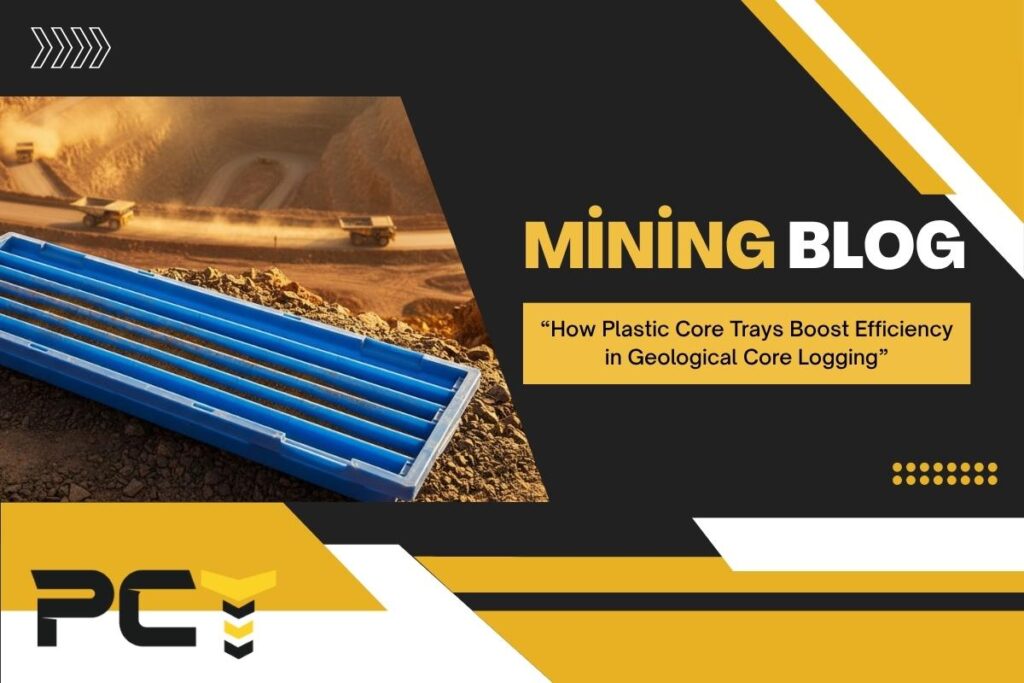
Geological core logging is a meticulous but vital process in drilling and mining projects. Every step – from retrieving core samples to cataloging, transporting, and analyzing them – can impact a project’s timeline and data quality. In recent years, plastic core trays have emerged as a game-changer for efficient drilling workflows. Unlike old-fashioned wooden or metal boxes, modern plastic trays offer features that boost productivity and protect sample integrity. They are lightweight, weather-resistant, and designed for rapid handling, making them an ideal choice for geological core logging operations that demand speed and accuracy.
This article delves into how plastic core trays improve operational efficiency. We’ll explore time savings in labeling and transport, smart design elements that streamline organization, integration with digital sample tracking systems, ergonomic benefits for field teams, and comparisons to traditional metal or wooden trays. By the end, it will be clear why switching to plastic core trays can lead to measurable improvements in drilling project workflows.
Time Savings in Labeling, Stacking, and Transport
One of the immediate ways plastic core trays enhance efficiency is by saving time during core handling. Labeling samples becomes quicker thanks to built-in features. Many plastic trays include dedicated ID tag slots or surfaces where geologists can write or attach labels securely. Having a molded-in place for labels means no more fumbling with tape or nails to attach identifying tags (a common hassle with wooden boxes). Clear markings and even pre-etched note areas on some trays let teams record depths or sample IDs on the tray itself, reducing the chance of mislabeling and speeding up the cataloging process.
Stacking and storing core trays is also far more efficient with plastic designs. High-quality plastic trays are engineered to stack neatly and securely, often featuring interlocking rims or grooves. For example, trays with full-depth channel heights ensure that when stacked, the core in an upper tray doesn’t touch or disturb the samples in the tray below. This stable stacking capability means field crews can quickly pile trays without constantly readjusting them to prevent tipping. Some models even have strapping slots for palletizing – workers can strap stacks of trays together on a pallet in one go, making transportation to labs or core sheds faster and safer.
Lightweight plastic construction translates to easier transport and handling. On average, a rugged plastic core tray weighs only around 2 kg, much lighter than equivalent metal or water-logged wooden boxes. This lighter weight means geologists and field technicians can carry more samples in one trip, or move them around with less fatigue. Over a long drill program, these saved minutes in every lift and carry add up, accelerating the workflow. As an added bonus, plastic trays often incorporate built-in carry handles on the ends, allowing one or two people to comfortably pick them up and maneuver them. Overall, the time required to label, stack, and haul core samples is significantly reduced, keeping projects on schedule.
Design Features for Rapid Sample Organization
Plastic core trays aren’t just convenient – they are purpose-built with features that support rapid sample organization and logging. Molded channel compartments hold each cylindrical core sample in place, preventing them from rolling and mixing. This organized arrangement means geologists can quickly lay out cores in sequence and immediately see the orientation and order of samples. Many trays include a bold “start” indicator marking on one end, clearly showing where to begin placing the first piece of core. This simple feature eliminates confusion about core orientation and reduces errors during logging, since the team always knows which end of the tray corresponds to the top of the drill hole.
To further speed up measurements and observations, some plastic trays have built-in scale markings along the sides. For instance, certain models feature measurement notches at regular intervals (e.g. every 100 mm) for a quick visual reference of core lengths. Instead of fumbling with a tape measure, geologists can estimate depths or sample lengths at a glance, which streamlines the logging process. Color-coding is another design advantage: trays are often produced in different colors corresponding to standard core sizes (NQ, HQ, PQ, etc.). This lets workers identify tray types or drill programs instantly, even from a distance – a subtle benefit that saves time when organizing and retrieving specific samples.
Durability and weather-resistance are also key design factors that maintain efficiency. Quality plastic core trays are molded from tough polypropylene or similar polymers that resist cracking and UV damage. UV stabilizers in the plastic ensure that even under harsh sun exposure, the trays won’t become brittle or fade. This means teams can store cores outdoors or on rigs for extended periods without constantly swapping out degraded boxes. Features like drainage holes are often included as well, allowing water to drain away from the cores. Dry samples are easier to examine and weigh, and the trays themselves don’t get waterlogged (a common issue with wooden boxes that can triple in weight when wet). By maintaining a stable, organized condition for samples, plastic trays help geologists work faster – no time wasted dealing with soggy or disintegrating containers.
Integration with Digital Core Logging Systems
Modern exploration projects increasingly rely on digital systems for tracking samples and logging data. Plastic core trays support this trend by integrating seamlessly with barcode and RFID-based sample tracking systems. Many plastic tray models come with flat areas or recesses to affix barcode labels, and some manufacturers even offer trays with pre-molded slots for RFID/NFC tags or QR code stickers. By tagging each tray with a unique code, field teams can scan a tray with a handheld device or smartphone and instantly pull up its metadata in a core logging software. This digital tray registry approach links physical samples to digital records, drastically cutting down on manual data entry and the potential for mix-ups. Instead of transcribing tray IDs or drill intervals by hand, a quick scan updates the database, saving time and reducing human error.
Such integration also improves inventory management. With every tray uniquely identified and tracked, operations can monitor the movement of core trays from drill site to core shed to laboratory in real time. Misplaced samples become a rarity because each tray’s location is logged in the system. If a laboratory needs a particular core interval, staff can quickly find which tray contains it and where that tray is, thanks to the barcode/ID system. The result is a more efficient drilling workflow where data about core samples flows as smoothly as the samples themselves.
Furthermore, digital integration enables advanced analysis. For example, geologists might use tablet-based logging applications at the core yard; by scanning a tray’s code, the software can auto-fill the borehole ID, depth range, or lithology template for that tray. This streamlined data collection means logging geotechnical details or assay sample intervals takes less time per tray. Some plastic core trays even come with companion software or recommended apps to maximize these capabilities, underscoring how the product is designed for the modern, connected field environment. In sum, plastic core trays act as a physical-digital bridge, bringing the analog world of rock samples into harmony with digital sample tracking systems for greater efficiency.
Ergonomic and Safety Benefits for Field Teams
Efficiency isn’t just about speed – it’s also about keeping the workforce safe and productive. Plastic core trays offer significant ergonomic advantages over their metal and wooden counterparts, which in turn boosts overall productivity. Lightweight trays reduce physical strain on geologists and technicians. Carrying heavy core boxes repeatedly can lead to fatigue or even injuries, especially in rough terrain. Plastic trays, being much lighter, allow crews to work longer with less exhaustion. A lighter tray is also easier to lift and maneuver, meaning tasks like loading trays onto racks or vehicles can be done more quickly and with fewer people. This not only saves time but also lowers the risk of back injuries and dropped samples.
Ergonomic design features are often built into plastic tray systems. For example, the CoreTech® tray line was specifically dimensioned to comply with manual handling guidelines, featuring a tray length that is comfortable to carry and integrated handles on both ends for a better grip. These handles and smooth edges allow two-person carries with balanced weight, or single-person lifts without awkward gripping. In contrast, traditional wooden boxes usually have to be grabbed from underneath, and metal trays might have sharp metal edges that discourage firm handling. Plastic trays’ rounded corners and one-piece molded construction eliminate those dangerous pinch points and jagged edges. Field teams can grab and move trays confidently without gloves full of splinters or slices from sheet metal, making the workflow safer and faster.
Safety in extreme conditions is another plus. Plastic does not conduct heat or cold the way metal does, so trays left in the sun won’t scald your hands when picked up. In freezing climates, plastic trays won’t give workers frostbite risk upon touch, unlike metal boxes. This thermal neutrality means teams can handle trays promptly in any weather, instead of wasting time waiting for them to cool down or donning extra protective gear. Also, because plastic trays are non-magnetic and chemically inert, they won’t interfere with instruments or expose workers to rust or chemical residues that might be present on corroding metal containers. All these factors contribute to a safer working environment. When workers are safer and more comfortable, they can focus on their jobs and log cores more efficiently. By minimizing injuries and handling difficulties, plastic core trays help maintain a high productive pace on drilling sites.
Real-World Productivity Improvements
The efficiency gains from plastic core trays are not just theoretical – field operations have noticed tangible improvements. For instance, a mining exploration team in a tropical region made the switch from wooden core boxes to plastic trays and reported significant time savings. The durable plastic trays withstood monsoonal rains without swelling or falling apart, whereas previously the team had to frequently pause work to replace water-damaged wood boxes. Over a 6-month drill program, this durability eliminated dozens of hours of downtime that would have been spent repairing or rebuilding core storage. The crew could continue logging right through harsh weather, confident the trays would hold together and protect the samples.
In another scenario, a large drilling project in arctic conditions relied on plastic trays designed for sub-zero temperatures. These trays remained impact-resistant even at –50 °C. The field geologists could leave cores outside in stacks without worrying about the boxes cracking. As a result, they avoided the time and labor of moving hundreds of meters of core into heated storage each night. The ability of plastic trays to endure extreme cold streamlined the workflow, allowing round-the-clock drilling and logging where previously the cold had imposed a hard stop to handle core storage.
Even on day-to-day tasks, the productivity boost is evident. Drilling companies have noted that with plastic trays, fewer people are needed to manage core handling. One person can label trays, carry them, and load them onto a truck with relative ease. In contrast, heavier wooden or metal boxes often required two or more people for the same tasks, effectively doubling the labor for core handling. By freeing up personnel, plastic trays let teams reallocate labor to other critical activities on site, improving overall project efficiency.
While each project’s numbers will differ, these real-world observations consistently show improved core tray productivity after switching to plastic. Companies see faster logging turnaround times, reduced backlogs of core awaiting processing, and smoother logistics from drill site to core storage. In a field where delays directly translate to higher costs, the adoption of plastic core trays provides a competitive edge through time saved and mistakes avoided.
Comparing Plastic vs. Metal and Wooden Trays
Understanding the efficiency of plastic core trays is clearer when we compare them to the traditional alternatives. Wooden core boxes, used for decades, have the advantage of low initial cost, but they come with many drawbacks in active operations. Wood is prone to rot and swelling when exposed to moisture, meaning a rainy week can warp a wooden tray and jam the cores inside. They also attract insects and can become moldy, often disintegrating in hot, humid climates. From a workflow perspective, wooden boxes can actually be quite heavy and cumbersome once loaded – especially if the cores are wet and the wood has absorbed water. Field teams also risk splinters and minor injuries handling rough wooden crates. All these issues lead to extra time spent reinforcing boxes, cleaning up broken pieces, or gingerly handling them to avoid injury, which slows down the logging process.
Metal core trays (usually steel or aluminum) solve some problems of wood but introduce others. Metal trays are extremely strong and can last a long time, which is good for storage, but they are much heavier to lift and transport. Each metal tray adds to the payload weight, increasing fuel costs and effort in the field. Metal is also susceptible to corrosion unless it’s stainless or coated – in wet or acidic conditions, a steel tray can rust, potentially staining or contaminating the cores inside over time. From an efficiency standpoint, metal trays might hold up under rough handling, but workers move more slowly with them due to the weight and the need to avoid injury on sharp metal edges. Temperature conduction is another concern: in very hot or cold environments, metal trays become uncomfortable or unsafe to touch, which can delay handling until conditions moderate or gloves are used. While metal boxes won’t burn or melt (and can be useful in high-heat scenarios), these practical downsides often make them less efficient for routine core logging workflows.
Plastic core trays, by contrast, hit a sweet spot between these options. They do not rot or rust at all – plastic is immune to moisture damage and insect attack, even in the toughest climates. This reliability means geologists spend zero time replacing degraded trays during a project. Plastics used are typically chemically inert, so there’s no risk of tray material reacting with core samples or leaching into them (an important factor when geochemical assays are involved). And as mentioned, plastic trays are light enough for speedy handling, yet engineered to be strong and impact-resistant, even at extreme temperatures. The longevity of plastic trays is comparable to metal – quality polypropylene trays can last for decades – but without the weight penalty. In essence, plastic trays combine the best attributes of wood and metal (lightweight like wood, robust like metal) without their respective shortcomings, making them the superior choice for optimizing core logging operations.
Tray Durability and Reduced Handling Errors
Durability is more than just a long lifespan; it directly correlates to efficiency by reducing mishaps and interruptions. Plastic core trays are built to withstand rough field conditions, which in turn minimizes handling errors and delays. For example, dropping a traditional wooden box might split it apart, scattering core pieces and mixing up carefully ordered samples. Recovering from such a spill can be a nightmare, requiring re-labeling and sometimes re-drilling if pieces are lost. Plastic trays, on the other hand, often survive falls or bumps without breaking. Their impact-resistant nature means cores stay put and in sequence, averting the chance of a costly mix-up. In short, a durable tray is a dependable tray – crews can trust that the sample they logged will still be in the correct place when it reaches the geologist’s table.
Similarly, the rigidity and strength of plastic trays prevent subtle errors. Under heavy loads, a flimsy container might bow or flex, causing cores from adjacent slots to slide over each other. This can confuse depth ordering or cause hairline fractures in brittle core sections. Sturdy plastic trays maintain their shape under weight, keeping each sample locked in its own channel. There are also fewer fiddly parts: no nails that can loosen, no separate wooden dividers that can pop out – just a solid one-piece form. With fewer points of failure, there are fewer opportunities for human error, such as picking up a tray and spilling contents because a handle gave way.
Durability also reduces delays related to replacing equipment. Every time a wooden or cheap plastic tray fails, work must pause to fetch a replacement and possibly re-transfer the core. Over a project, these pauses add up. High-quality plastic trays virtually eliminate these unscheduled stoppages, as they rarely need to be swapped out. Field teams can focus on logging and drilling instead of constantly managing the state of their core boxes. And since many plastic trays come with long-term warranties or guarantees from manufacturers (some even a lifetime warranty), project managers have confidence that the trays won’t be a limiting factor in operations. By providing a rugged, reliable means of core storage, plastic trays ensure that the only thing handling teams need to think about is the geology – not the container holding it.
Conclusion
Plastic core trays have proven to be more than just an alternative to wood or metal – they are an upgrade that meaningfully improves the efficiency of geological core logging. Through smart design features like molded channels, start indicators, and integrated handles, they speed up labeling and organization of samples. Their lightweight, stackable nature saves time in handling and transport, all while reducing physical strain on workers. Modern plastic trays align with digital initiatives in the industry, effortlessly merging with barcode and RFID tracking systems to streamline data flow in drilling projects. They outshine traditional trays in durability, weathering extreme conditions without rot or rust, which prevents delays and protects sample integrity.
For engineers, geologists, and mining professionals, adopting plastic core trays can translate to faster project turnaround, improved safety, and fewer costly errors in the field. In today’s competitive and data-driven mining environment, the tools we use – down to the humble core tray – play a crucial role in operational success. Plastic core trays exemplify how innovation in simple equipment can deliver outsized gains in productivity. By boosting efficiency in core logging workflows, these trays ultimately help teams focus on discovery and analysis, driving projects forward with confidence and speed.