


How Plastic Core Trays Support Gold Exploration Worldwide
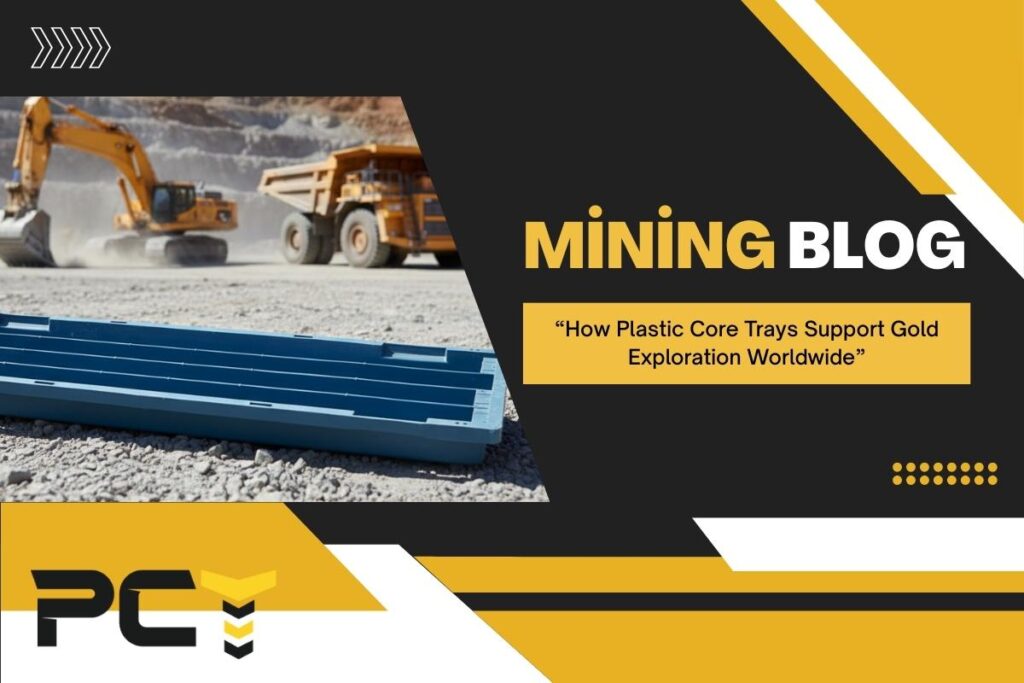
Plastic core trays may seem like a humble piece of gold mining equipment, but they play an outsized role in gold exploration across the globe. From the scorching deserts of Australia to the frozen tundra of Canada, and from tropical African rainforests to the high Andes of Peru, geological core trays ensure that valuable rock samples are preserved, organized, and transportable. In this blog, we compare major gold-producing regions – Australia, Canada, Ghana, South Africa, and Peru – and examine how plastic core trays help overcome each location’s logistical challenges and harsh field conditions. We’ll also explore why plastic trays are preferred in certain climates or terrains (tropical humidity, desert UV exposure, alpine cold) and highlight case-style examples of their use in remote or high-volume operations. Throughout, the focus remains on durability, ease of transport, and data integrity over long exploration timelines.
Global Gold Exploration Challenges
Gold exploration takes place in virtually every environment on Earth. Each region comes with unique climate extremes and logistical hurdles. Yet the fundamental task is the same everywhere: drilling into the earth to collect cylindrical core samples, then storing and analyzing those cores to guide mining decisions. Proper core handling is critical because these samples represent the geological record of a potential gold deposit. If cores are damaged, disorganized, or lost, it can derail multi-million dollar exploration programs.
Exploration sites are often remote and operate under tough conditions. Consider that mining projects run in deserts, jungles, mountains, and Arctic tundra. In each of these settings, core trays (also called core boxes) must keep samples safe despite environmental stresses. The realities include extreme temperatures (above 45°C heat in deserts and sub-zero cold in Arctic zones), intense sunlight, heavy rain or humidity, rough handling during transport, and long-term outdoor storage. Traditional materials like wood or cardboard often fail in these conditions – wood can rot or get eaten by insects, and cardboard disintegrates when wet. That’s why modern exploration teams worldwide are standardizing on plastic core trays designed to withstand such extremes.
Let’s examine five major gold-producing regions and see how plastic core trays in mining operations address each area’s challenges.
Australia: Outback Heat and UV Exposure
Australia is one of the top gold producers, with much of its exploration happening in arid outback regions. The climate in places like Western Australia is hot and dry, with summer temperatures regularly above 40°C and relentless sunshine. Additionally, field sites are often remote, requiring equipment that can handle long journeys by road or light aircraft.
One major challenge in Australian exploration is UV radiation. The sun’s ultraviolet intensity in Australia is among the highest in the world. Prolonged sun exposure can wreak havoc on materials: cheap plastics become brittle, and even metal boxes can overheat or corrode. Plastic core trays built for the outback are UV-stabilized to resist sun damage. This means they can sit out on a drill site or core yard under harsh sun for years without cracking or losing strength. High-quality trays contain UV inhibitors that prevent the polymer chains from breaking down, allowing them to remain flexible and tough despite constant sun. For geologists in the desert, this is critical – they can stack core trays outside with no need for expensive storage sheds, knowing the trays won’t disintegrate even under desert UV exposure.
Another Australian concern is simply the heat. In the outback, midday surface temperatures can exceed 50°C. Plastic trays have been proven to tolerate extreme highs (up to about 60°C) without deforming. Unlike metal, which gets extremely hot to the touch in the sun, plastic stays relatively cooler and safer to handle. And unlike wood, plastic won’t dry out or split under intense heat. Durability in high temperatures is a key reason many Australian operations have moved to plastic trays – in fact, plastic core trays have performed reliably in field temperatures as high as 60°C in places around the world.
Logistically, Australian exploration often involves moving large quantities of core samples over long distances (from remote drill rigs to labs in Perth or Adelaide, for example). Sturdy plastic trays can be stacked securely on pallets for trucking or shipping. They are built to interlock when stacked, preventing shifts or spills during transport. Additionally, plastic trays are lightweight compared to traditional wooden boxes. This reduced weight means more trays (and thus more meters of core) can be loaded per trip, improving efficiency. Field teams in Western Australia’s goldfields have found that using lightweight plastic core trays helps maximize each supply run to remote camps. For instance, in one case study a helicopter could airlift about 50% more plastic core boxes in one sling load than wooden ones – dramatically increasing the core volume transported per flight. This kind of improvement in global mining logistics is invaluable when every flight or truck journey to a distant site counts.
The photo above shows a typical plastic core tray loaded with drill core. Each tray has several parallel channels to cradle the rock cores, usually holding around 4–5 rows of core segments (depending on core diameter). In Australia, standard tray sizes like NQ or HQ are used (named after common drill core diameters). The trays often have molded-in handles on the ends for easy lifting, and some designs include clip-on lids or covers to keep dust and sunlight off the cores. Notice the tray’s sturdy plastic ribs and dividers – these provide structural support so the tray doesn’t flex or buckle even when filled with heavy rock. This robustness is vital when trays are stacked high at a hot, dry drill site or jostled in the back of a ute (pickup truck) barreling across the outback. Australian crews appreciate that plastic trays don’t require assembly (unlike some wooden boxes that must be nailed together on site) and they aren’t prone to warping or shrinking in the heat. Overall, in Australia’s gold exploration scene, UV-resistant plastic trays have become the go-to solution to ensure core samples survive the outback’s unforgiving sun and heat for the long haul.
Canada: Subzero Cold and Remote Access
Canada’s gold exploration spans from the temperate forests of Ontario and Quebec to the subarctic and Arctic regions of the Yukon and Nunavut. Cold weather and remote locations define the Canadian exploration experience. Winter temperatures in northern Canada can plummet below -40°C, and even summer nights at high latitude are near freezing. Additionally, many exploration sites are accessible only by long ice roads, bush plane, or helicopter, so transportability of equipment is crucial.
Plastic core trays have proven their worth in Canada by withstanding extreme cold and simplifying logistics. In the past, some Canadian projects relied on wooden core boxes, partly due to a belief that wood tolerates sub-zero temperatures well. While it’s true that dry wood doesn’t shatter from cold, wooden boxes can still suffer in other ways (they can absorb water and then crack when it freezes, and any metal nails or brackets can rust or loosen). Plastic trays, on the other hand, are engineered to remain impact-resistant even at very low temperatures. For example, the plastic used in quality core trays has been tested down to around -50°C without becoming brittle. Explorers in places like northern Ontario or the Yukon have successfully left plastic core trays outside in winter snow, then handled them without issue – no cracks and no frozen fingers sticking to metal, since the plastic doesn’t get as frigid to touch.
Remote access is another Canadian challenge. Often, the only way to get supplies to a drill camp in the bush or mountains is by helicopter sling load. Here, every kilogram matters. Lightweight plastic core trays offer a huge advantage over heavy wooden boxes. Teams have found that switching to plastic trays allows more core to be transported per flight. For instance, in one documented trial a helicopter could carry 84 plastic core boxes in one lift versus only 56 wooden boxes of similar core – a 50% increase in payload efficiency (while staying within safe weight limits). That kind of boost can save dozens of flights over a drilling season. In practical terms, using plastic trays means a helicopter can haul out months of accumulated core samples from a remote camp in fewer trips, or conversely, bring in a larger stock of empty trays and other gold exploration supplies at once. This efficiency reduces costs and ensures the exploration team can keep working without supply shortages.
Canadian explorations also contend with moisture from snow and thaw. Wooden boxes left in snow can absorb water and eventually rot or grow mold if stored indoors later. Plastic trays are waterproof and inert – they don’t absorb moisture, and many designs include drainage holes so that melting snow or rain doesn’t pool inside the tray. This feature prevents cores from sitting in water or icing over. Additionally, plastic won’t corrode if the cores contain sulfide minerals that create acidic runoff; being chemically inert, plastic trays are not susceptible to sulfide corrosion, unlike metal parts which might rust in contact with acidic water. The ability to endure freeze-thaw cycles, plus resist chemicals, makes plastic trays ideal for maintaining sample integrity through Canada’s seasonal swings.
In summary, for Canada’s far-flung and frigid gold camps, plastic core trays combine durability in cold climates with crucial weight savings for transport. They help geologists safely retrieve and store core samples even when working “off the grid” in ice and snow. By preventing weather-related damage to cores and enabling more efficient logistics, these trays support successful exploration in Canada’s challenging frontier regions.
Ghana: Tropical Rain and Humidity
Ghana is a leading gold producer in West Africa, home to tropical rainforests and savannah. Exploration sites here face a very different climate profile: high humidity, heavy rainfall, and abundant insects. The average relative humidity in Ghana is persistently high – generally above 60% year-round and often exceeding 80% in the mornings. There are pronounced wet seasons with torrential rains that can flood drill sites or turn access roads to mud. For core sample storage and handling, the constant moisture and heat can be a nightmare if you use the wrong materials.
Wooden core boxes, once common, fare poorly in Ghana’s tropics. Wood readily swells, warps, or rots in high humidity. Fungal mold can grow on damp wood, and termites and other insects will happily chew through wood if given the chance. There have been cases in tropical exploration where wooden core boxes became moldy and soft after just a single rainy season, risking the loss of the valuable cores inside. In fact, wooden core boxes can swell, rot, or grow mold in tropical humidity, and the mold can stain or destroy labels and even the cores themselves. This kind of sample damage is unacceptable for preserving geological data.
Plastic core trays, by contrast, are an ideal solution for Ghana’s climate. They are impervious to rot and insects – plastic cannot be eaten by termites and won’t support mold growth on its surface. Even if trays sit out in pouring rain, they don’t deform. Quality plastic trays are also UV-stabilized (important in Ghana’s intense sun when it’s not raining) and often have built-in drainage. Drain holes let rainwater drain out of the tray channels, so cores aren’t submerged for long if they get wet. The trays can be left outside or in simple open-air sheds (just a roof on poles) for years without disintegrating – something wood could never do in that environment. Using plastic trays thus ensures that even in 90% humidity or after a downpour, the cores remain secure and data integrity is maintained.
The image above shows a geologist in Ghana examining a piece of drill core in the field. Tropical exploration often means working in lush, remote areas. In such settings, plastic core trays are valued for their rugged transportability and resilience. Teams carry trays through jungle tracks or load them onto 4×4 vehicles that slog through mud. Plastic trays, being lightweight, make this manual handling easier – workers can carry a tray on their shoulder or hip comfortably, a practice that was also a noted advantage of wooden boxes, but plastic is lighter still. The durability of plastic ensures that if a tray is accidentally dropped in transit, it’s far less likely to crack than a brittle material. Impact-resistant plastic trays can survive falls or rough handling without spilling the cores, an attribute crucial when field conditions are unpredictable (for example, slipping on wet ground while carrying a tray).
Many Ghanaian exploration projects operate with minimal infrastructure – perhaps a tented camp and a basic core logging shed. In these scenarios, the longevity of plastic trays is a big benefit. Cores from early drill programs might need to be kept for many years for reference. A durable plastic tray can last 30–40 years outdoors (and effectively indefinitely if stored under cover), whereas a wooden box in Ghana might barely last 5 years in good condition. This long lifespan means companies can maintain a continuous archive of core samples through the entire exploration and mine development timeline. Even after heavy use, plastic trays remain intact, the labels remain readable, and the cores stay organized – ensuring that when geologists or engineers revisit the cores for new analyses, everything is as preserved as the day it was drilled.
South Africa: Deep Mines and High-Volume Core Management
South Africa’s gold mining is famous for its very deep mines (like those in the Witwatersrand basin) and long mining histories. Exploration in South Africa today often occurs around existing mines or in extension of well-known gold belts. The climate can range from semi-arid in some regions to more temperate in others, but a common challenge here (and in many mature mining regions) is handling huge volumes of core samples collected over decades of exploration.
For example, a large South African mining operation might drill tens of thousands of meters of core every year for exploration and grade control. Over time, this results in vast core farms or storage facilities with stacked trays containing millions of meters of drill core. Managing this volume requires core trays that are uniform, stable when stacked, and long-lasting. Plastic core trays excel in high-volume, long-term storage situations. They are engineered to stack neatly – many have interlocking features or ribbed edges that ensure trays align and sit securely on top of each other. This prevents stacks from toppling, which is important for safety when core stacks can be dozens of trays high in a core shed. In contrast, old-style wooden boxes often varied slightly in size and could stack unevenly or even collapse if the wood weakened; cardboard core boxes would be completely untenable for tall stacks because they deform easily.
Durability is another factor for South African operations. Some core might be stored outdoors due to space constraints, or in simple sheds exposed to dust, heat, and occasional rain. Plastic trays are made to handle full life-of-mine outdoor exposure, meaning they can literally sit outside for 10, 20, 30+ years and still hold together. They do not rust, so even if a tray has metal components (most are all-plastic, but some systems use metal reinforcements), those are usually galvanized or stainless to avoid corrosion. This is particularly relevant if the drill core is mineralized with sulfides (common in gold ores). When sulfide-rich core oxidizes, it can create acidic conditions that eat into metal. Plastic trays, being acid-resistant and chemically inert, suffer no such problems. Sulfide-bearing gold ores can be stored in plastic trays without the tray material corroding or contaminating the sample, preserving the core’s integrity for geochemical analysis.
Additionally, South Africa’s mining environment puts emphasis on organization and data tracking – with so much core, keeping it catalogued is vital. Plastic trays often come with features to aid in this: they might have engraved numbering systems, slots for labels or tags, and even options for barcoding or RFID tagging in advanced versions. For instance, some modern plastic tray models have clip-in core markers and ID tags so that each row of core can be labeled with the depth interval. This helps geologists maintain data integrity, ensuring that years later one can identify exactly which borehole and interval a given tray’s core belongs to. By supporting clear labeling and protecting those labels from damage (since plastic won’t host mold or disintegrate), the trays contribute to the long-term data integrity of exploration programs.
The image above (from a West African project) illustrates a core storage area with hundreds of core-filled trays kept on the ground under a simple roof. This kind of setup is common in Africa and elsewhere – essentially an open-air core yard. In high-volume operations like those in South Africa, similar yards or warehouses may hold an immense library of core. Plastic trays are invaluable in these scenarios because their uniform size and strength allow efficient use of space (trays can be tightly packed and high-stacked). They also maintain their shape and do not impart contaminants to the core over time. For example, a wooden tray might shed splinters or sawdust, or a painted metal tray might flake paint – but plastic trays are typically solid, food-grade polymers that won’t contaminate samples. This matters for sensitive gold assays where even small debris could affect analysis. Furthermore, the durability of plastic means that even after years of exposure to South Africa’s sun and periodic rain, or the dry air underground if cores are stored in mine tunnels, the trays remain intact. Many mines have switched to plastic core trays not only for new drilling but also for re-housing old core previously kept in deteriorating wooden boxes, essentially to re-secure their geological archives for the future. As a result, exploration and mine geology teams can trust that their core collections – sometimes representing decades of data – are safe and accessible whenever needed for re-examination or audit.
Peru: Andes Terrain and Alpine Conditions
Peru offers a mix of gold exploration environments – from high Andes mountains to Amazonian jungles. Major gold deposits like those in the Andes (e.g., the Yanacocha region) are often at elevations of 3,000–4,500 meters. Here, explorers contend with thin air, intense UV radiation at altitude, cold nights, and rugged terrain. In the eastern lowlands, explorers face dense forests, heavy rains, and tropical heat. Plastic core trays provide versatility to handle this range of conditions.
In the high Andes, a notable issue is the daily cycle of warm days and freezing nights. Materials can undergo stress from these temperature swings. Plastic trays handle thermal cycling well – they don’t shrink or swell significantly with temperature, and any slight flexibility in plastic actually helps absorb thermal stress. By contrast, a rigid material like a brittle plastic or a poorly sealed wooden box might crack after repeated freeze-thaw cycles. The high UV levels at altitude (amplified by thinner atmosphere) mean UV stabilization is key here as well – just like in Australian deserts. UV-resistant plastic trays ensure that even under the equatorial high-altitude sun, the trays won’t rapidly age.
Terrain and logistics in Peru’s mountains often demand creative transport solutions. Many drill sites are reachable only by foot or mule, or via helicopter due to steep slopes and lack of roads. Lightweight plastic trays again show their value: geologists or porters can carry empty trays up narrow trails, or helicopter nets can sling a bundle of trays into an alpine camp without overloading. If core must be walked out by porters or on mules, every pound saved counts. Plastic trays being lighter than wood or metal means more core per load can be transported out from a remote Andean drill platform. Additionally, their toughness is crucial when transporting by pack animal or on rough roads – bouncing around on a mule or 4×4, the cores in plastic trays stay secure because the trays absorb shocks and won’t split at the joints (there are no nailed joints as in wood, and no seams to pop open).
In Peru’s eastern jungles, conditions resemble those in Ghana – high humidity and rainfall – so the same benefits apply: no rot, no termite damage, and excellent performance in wet conditions. One example case: an exploration team in Peru’s Madre de Dios region (Amazon rainforest) stored their cores in plastic trays on simple racks under a tarp roof. Despite months of heavy rain and 100% humidity, the trays suffered zero degradation, and all core markings remained legible. The geologists noted that previously, in similar conditions, wooden core boxes had grown mildew and some even collapsed, mixing up core samples. By switching to plastic, they protected their data and avoided the messy task of re-boxing or relabeling moldy cores.
Finally, Peru’s exploration often involves long timelines (permitting delays, seasonal weather pauses, etc., can mean core sits for a long time before analysis or resource modeling). The longevity of plastic trays in outdoor storage is a big plus for these drawn-out projects. Whether core is waiting at a high-altitude camp through the winter, or stored at a base for years, companies know the samples will remain intact. With plastic trays boasting usable lives of multiple decades, a discovery made today can be analyzed and re-analyzed by geologists many years down the line with the original core still in good shape.
How Plastic Core Trays Ensure Durability, Transportability, and Data Integrity
Across all these regions – and others – the reasons plastic core trays are favored boil down to their durability, ease of transport, and ability to safeguard data over time. Below, we summarize these key advantages and how they directly address the challenges of global exploration:
-
Climate Durability: Plastic trays are engineered for harsh climates. They handle extreme heat and cold (field-proven from -50°C to +60°C), resist UV radiation with special stabilizers, and won’t rot or rust in wet conditions. Whether under tropical rains or desert sun, a quality plastic tray remains structurally sound. This durability ensures that trays can be left at remote sites or core farms for the entire life of an exploration project (often many years) without needing constant replacement. In terms of longevity, plastic far outlasts wood or cardboard – potentially 30+ years outdoors vs. just a few years for the alternatives.
-
Lightweight & Transportable: Plastic core trays are relatively lightweight while still strong. This is crucial for global mining logistics, as trays often must be shipped internationally and hauled to remote locales. The lighter weight lowers shipping costs and fuel usage for air/land transport. In the field, lighter trays mean more can be carried by helicopter or vehicle in a single load, increasing efficiency (as seen in the example of 84 plastic vs 56 wooden trays per helicopter lift). Also, individuals carrying trays appreciate the lighter load – reducing fatigue and injury risk. Some plastic tray designs also nest or stack compactly when empty, further streamlining transportation and storage before use.
-
High Impact Resistance: Exploration work is rough-and-tumble. Trucks bounce along unpaved roads, forklifts and workers stack heavy trays, and occasionally trays get dropped or tipped over. Plastic trays are built to absorb such impacts without shattering. They often use flexible yet tough polymer (like HDPE or polypropylene) that can deform slightly and spring back rather than crack. Tests and field use have shown that an impact-resistant core tray can prevent core loss even if an accident happens – for example, if a stack of trays falls, the plastic trays are much more likely to survive intact than brittle alternatives. This property protects the irreplaceable rock samples inside, directly contributing to data integrity.
-
Stackability and Stability: In any exploration camp or core warehouse, space is at a premium. Plastic trays are designed to stack securely. They typically have interlocking features (rims, grooves, or pins) that keep stacks straight and stable. This is important for safety (stacks won’t easily topple onto personnel) and for preserving cores (stable stacks mean cores won’t get mixed or damaged by collapsing piles). Being able to stack trays high also means even a small core shed can hold a lot of core – critical for high-volume projects. The trays often come in standard dimensions that fit common racking systems and pallets, enabling efficient global shipping and on-site storage.
-
Protection of Data (Sample Integrity): Perhaps most importantly, plastic core trays help maintain the integrity of geological data. They do this by protecting the physical core and the associated labels/markings. Unlike wood, plastic trays won’t contaminate or bias geochemical samples (no wood fibers or tannins leaching in, no rust). They also keep cores in order; trays have dividers to separate each run of core and often have slots for depth markers. Many plastic trays include features like clip-in core markers and label holders, so that identifying information travels with the tray. Because the trays themselves aren’t prone to deterioration, the labels on or in them remain legible – e.g. waterproof tags or marker ink stay readable because the tray doesn’t soak up water or foster mold. Over a long exploration timeline, this means the data recorded on Day 1 (which piece of core is from what depth) is still clear on Day 1000. Consistent sample numbering and preservation prevents costly mix-ups or the need to re-drill holes. Essentially, plastic trays act as the faithful archivists of the project’s core library.
The image above shows an empty plastic core tray, highlighting its design features. You can see the parallel channels where drill core segments are laid out, and the reinforced walls between channels that give the tray rigidity. Most trays like this one are made from heavy-duty UV-stabilized polypropylene or polyethylene. They often have ridges or feet on the bottom that lock into the tray below when stacking, as well as molded hand grips on the ends. The bright color (often light grey, blue, or white) helps keep the cores cool in sunlight (white or light colors reflect sun, reducing heat absorption) and makes labeling easier to read. Some trays also have pre-numbered increments or ruler markings along the side to quickly measure core or index depth intervals. All these thoughtful design elements stem from decades of field experience and feedback from geologists. The result is a core tray that is not just a box, but a tool for efficient geological sampling – enabling faster cataloguing, safer handling, and reliable long-term storage of samples.
Conclusion
From the tropical goldfields of Ghana to the frozen exploration camps of Canada, plastic core trays have proven to be indispensable in supporting gold exploration worldwide. They have addressed the logistical and environmental challenges that once plagued sample handling: no more cores lost to a termite-infested wooden box, no more broken trays in winter cold, and no more faded labels due to mold or weather. By emphasizing durability (surviving extreme heat, cold, UV, and moisture), transportability (lightweight and stackable for easy shipping and field mobility), and data integrity (preserving samples and labels for decades), plastic geological core trays ensure that geologists and exploration managers can focus on finding gold, not worrying about sample damage.
In a global industry where each drill core can hold the clue to the next big gold discovery, maintaining the quality of those samples is paramount. Core trays in mining might not get the same attention as high-tech drilling rigs or geophysical surveys, but they are just as critical to the success of exploration programs. A stable, long-lasting tray is literally the foundation upon which the geological data is stored and interpreted. As we’ve seen, different regions have different demands – be it UV in Australia, ice in Canada, rain in Ghana, deep archives in South Africa, or mountain treks in Peru – yet in each case, the plastic core tray rises to the challenge and proves its worth.
In the end, the widespread adoption of plastic core trays reflects a broader trend toward smart, sustainable practices in exploration. These trays reduce waste by lasting longer, improve safety by being lighter and easier to handle, and protect the invaluable information contained in every meter of drill core. For geologists, project engineers, and exploration managers around the world, investing in robust plastic core trays means investing in the success and reliability of their gold exploration endeavors. The gold hidden beneath the earth’s surface may be difficult to find, but with the right tools – including something as unassuming as a plastic core tray – the journey from discovery to mining becomes a far more achievable and efficient prospect.