


Plastic Core Tray Checklist for Geologists
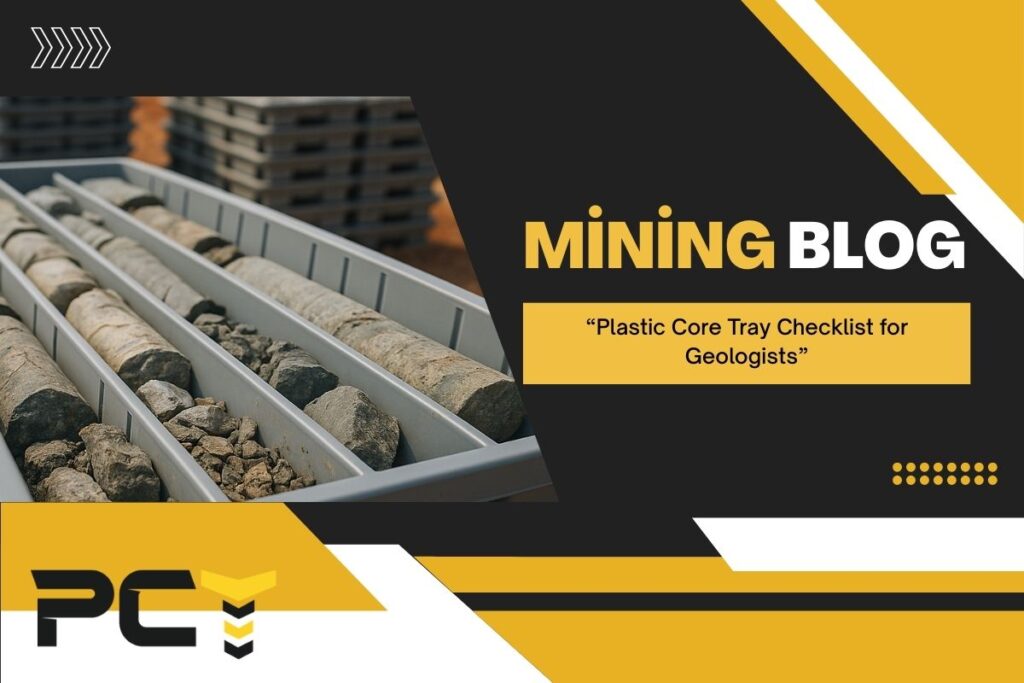
The geologist’s work begins at the drill site and often continues for decades after the last sample is extracted. At the centre of this process lies a tool so ordinary that it is sometimes underestimated: the core tray. Far more than just a container, a tray is the foundation of accurate sample storage, safe transport, and reliable geological data. For exploration and mining projects where millions of dollars are invested in drilling, choosing the right plastic core tray is an operational decision that carries long-term consequences.
This comprehensive checklist explores the factors geologists must evaluate before purchasing core trays or core boxes. By breaking down material choices, technical specifications, sustainability, logistics, and cost, we aim to provide a clear roadmap for making the right investment in core sample trays.
Why Core Trays Matter More Than You Think
In the field, a misplaced, contaminated, or damaged core sample can derail months of work. Geological data must remain precise from the moment a drill rod comes out of the ground until the samples are logged, photographed, analysed, and archived. The core box or tray is responsible for protecting this continuity.
Poor-quality trays risk:
-
Sample loss due to breakage, contamination, or exposure
-
Misidentification caused by unclear labelling or fragile markers
-
Safety hazards for workers handling heavy, sharp-edged boxes
-
Escalated cost through re-drilling or duplicate sampling
A reliable plastic core tray directly reduces these risks while improving efficiency, safety, and sustainability across the project life cycle.
Comparing Materials: Steel, Wood, Cardboard, and Plastic
For decades, core boxes have been manufactured from a variety of materials. Each comes with distinct advantages and critical drawbacks:
-
Steel trays: Extremely strong but dangerously heavy. They conduct heat and cold rapidly, risking injury to workers and damage to samples. Sulphide ores also corrode steel, compromising long-term storage.
-
Wooden boxes: Widely used in colder regions such as Canada and Scandinavia, wood offers strength and local availability. However, termites, moisture, and rot reduce lifespan. They are also prone to splinters and warping over time.
-
Wax cardboard boxes: Lightweight, flat-packed, and cheap to ship, but highly vulnerable to collapse, deformation, and water damage. They often need additional protective storage, increasing operational cost.
-
Plastic core trays: Modern plastic core trays, especially those made from recycled plastic, are now considered the global benchmark. UV-resistant, impact-tolerant, stackable, and lightweight, they are engineered specifically for geological applications.
Among these, plastic core trays strike the best balance between durability, safety, sustainability, and long-term cost-effectiveness.
Technical Standards: Size and Compatibility
Not all core trays are created equal. Choosing the wrong size or channel configuration can lead to misfits, unstable stacking, or wasted space. The international standards most commonly used include:
-
HQ tray (HQ-Size-4, 49–64 mm core diameter, 4 × 1 m, 107 × 34 × 8 cm) – A workhorse tray suitable for larger core samples, offering stability and volume efficiency.
-
PQ trays – Wider channels designed for thick diameter core.
-
NQ trays – Standard size for many exploration projects.
-
BQ trays – Slimmer channels used for specific drilling conditions.
Geologists should always confirm that their core trays match the core diameter standards of their drilling program. A mismatch may lead to wasted storage or, worse, compromised sample preservation.
Checklist of Must-Have Features
When evaluating suppliers, geologists should demand more than just basic containers. The ideal plastic core tray should offer:
-
1 m channel length consistency – for efficient logging and reduced tray count.
-
Extra channel height – to prevent protrusion of fractured cores.
-
Drainage and ventilation holes – to avoid waterlogging and accelerate drying.
-
Smooth roller-racking compatibility – essential for lab efficiency.
-
Bold “Start” indicators – minimising logging mistakes.
-
Non-suction channels – preventing wet cores from sticking to the tray base.
-
Interlocking stackability – safe stacking in warehouses or field sheds.
-
UV and chemical resistance – crucial for outdoor storage in mining camps.
-
Ergonomic grip bars – safe handling for one or two workers.
-
Permanent identification options – RFID, metal tags, or stenciled codes.
-
Clip-in core markers – to maintain clear sample separation.
-
Durable lids and separators – added protection during long-term storage or transport.
Without these features, the cost of re-sampling, contamination, or damaged trays will quickly outweigh the savings of cheaper alternatives.
The Case for Recycled Plastic Core Trays
The mining industry is under increasing pressure to demonstrate sustainability. Choosing recycled plastic core trays is a direct way to reduce environmental impact while maintaining operational efficiency.
At Plastic Core Trays (PCT), for example, more than 8,900 tons of plastic have already been recycled into durable trays. That is equivalent to the annual waste output of over 120,000 people. Powered by a 7.3 MW solar facility, the factory operates with minimal carbon footprint.
The benefits of recycled plastic core trays include:
-
Longer lifespan: 30–40 years in outdoor field conditions, essentially permanent in indoor archives.
-
Reduced carbon emissions: Recycled input material and solar energy.
-
Lower total cost of ownership: Fewer replacements over the life of the project.
Cost Considerations
When it comes to trays, the cheapest option upfront is rarely the most affordable long-term.
-
Transport cost: While cardboard may be cheaper to ship, plastic trays avoid the high replacement cost caused by breakage or collapse.
-
Storage cost: Plastic core trays can be stored outside without sheds, cutting infrastructure expenses.
-
Replacement cycles: Wooden and cardboard trays may last a few years; a plastic core tray lasts decades.
Ultimately, the correct choice balances cost with durability, safety, and sustainability.
Global Distribution and Logistics
Time is money in exploration. A delayed shipment of core trays can halt operations and cost projects millions. Reliable suppliers must offer:
-
Same-day dispatch – ensuring no downtime in urgent projects.
-
Global reach – shipments by land, sea, and air to remote camps as well as established hubs.
-
Bulk supply capacity – factories producing over 320,000 trays monthly and scaling to 10 million annually.
This ensures a consistent supply chain regardless of project location.
The Safety Factor: Protecting People as Well as Samples
Geologists and drillers handle trays daily, often in rough conditions. A poorly designed core box may have sharp edges, excessive weight, or weak stacking stability — all of which lead to workplace injuries.
By contrast, a well-designed plastic core tray offers:
-
Lightweight handling without compromising strength
-
Smooth grips to reduce strain and cuts
-
Stable stacking that prevents accidental collapses
Field safety is as important as sample security, and trays must address both.
Long-Term Investment: Beyond the Field
A final consideration is how trays behave not just in the field, but also in long-term storage. Mining companies frequently revisit archives decades later. Only plastic core trays, particularly those made from recycled plastic, ensure samples remain intact for reanalysis.
In this sense, the tray is not just a container—it is an archive of geological history.
For geologists, every decision in the field has consequences. Selecting the right plastic core tray is not just about transporting rocks; it is about preserving the scientific and economic value of every drilling campaign. The best trays combine durability, stackability, sustainability, and affordability, ensuring that geologists can rely on their samples today and decades into the future.
Whether you are considering HQ, PQ, NQ, or BQ core trays, or specialised chip trays, the checklist outlined above provides a roadmap for making the right investment. In modern exploration, there is no room for compromise — only for core sample trays that meet the highest standard.