


Plastic Core Trays and Sustainable Mining in Europe
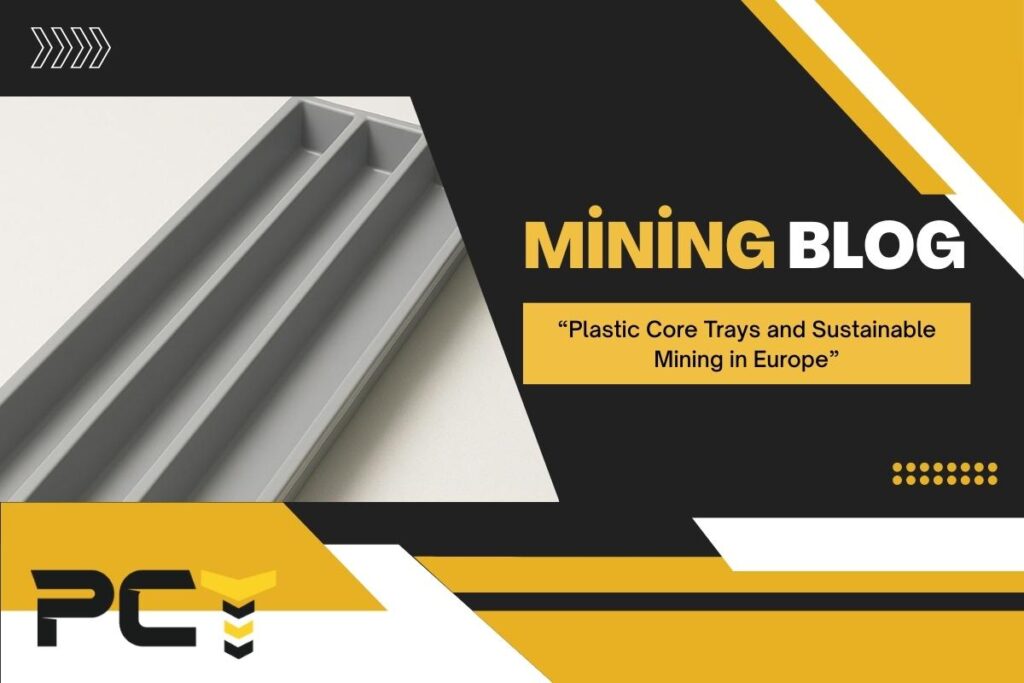
Europe’s mining industry is undergoing a green transformation, with every aspect of operations being scrutinized for sustainability. One often-overlooked piece of this puzzle is the humble core tray used for geological samples. These trays – especially when made from recycled plastic using solar energy – are emerging as unsung heroes in reducing the carbon footprint of mining projects. As the sector seeks to align with Environmental, Social, and Governance (ESG) goals and Europe’s climate targets, recycled plastic core trays are helping companies shrink their environmental impact while improving on-site efficiency. This article explores how these innovative core trays contribute to sustainable mining in Europe, their role in geological sample storage, benefits for logistics and data accuracy, and how products like BQ, NQ, HQ, and PQ core trays support both operational needs and ESG objectives.
Core Trays in Geological Sample Storage: Importance and Standard Sizes
In any mineral exploration or mining project, drilling into the earth yields long cylindrical core samples of rock that must be preserved and analyzed. Core trays (also known as core boxes or sample trays) are fundamental tools for organizing these valuable samples. They keep drill cores in sequence, labeled with depth and location, so geologists can “read” the underground geology without confusion. Losing orientation or mixing up core pieces can be disastrous – a misplaced or damaged core might erase months of work and millions of euros in exploration costs. Thus, reliable core trays are essential for data integrity in mining: they maintain the order of pages in the geological “book” that the drill hole represents.
Modern core trays are carefully designed for this task. Typically made of durable plastics like HDPE, each tray has parallel channels to cradle the cores. After each drill run, the recovered core segments are laid in the tray in exact order, often separated by small blocks indicating depth intervals. Trays are then labeled with the drill hole ID and depth range, enabling anyone later to retrieve a specific piece of core and know precisely where it came from. Features like standardized one-meter interval markings and clear start/end indicators in trays help prevent mix-ups and ensure accurate depth recording. Some operations even photograph every tray for digital records, a practice only effective if the trays themselves keep samples well-organized.
Standard core sizes in exploration are typically referred to by codes such as BQ, NQ, HQ, and PQ, and it’s crucial that core trays accommodate these. These letters correspond to industry-standard drill core diameters used in different drilling methods. For example, an HQ tray is sized for an HQ core (~63.5 mm core diameter) and usually holds about 4–5 meters of core per tray. NQ trays fit NQ cores (~47.6 mm) with roughly 5–6 m of core per tray, while PQ trays – the largest – handle PQ cores (~85 mm diameter) but only about 3–4 m of core due to the larger sample size. On the other end, BQ trays are for BQ cores (~36.5 mm) and can fit approximately 6–7 m of core each. These size-specific trays ensure that whether a project is drilling a small-diameter pilot hole or a large-diameter test hole, there’s a matching tray that secures the cores snugly without wasted space. Having sustainable core trays available in all standard sizes means mining companies can adopt greener practices on any project, without worrying about compatibility or performance.
From Wood to Recycled Plastic: A Sustainable Upgrade
For decades, core samples were stored in wooden boxes or metal trays. While they served the basic purpose, they had many drawbacks. Wooden boxes were heavy and prone to rot, insects, and splintering, often falling apart after a few seasons especially in damp climates. Steel trays were robust but extremely heavy (making filled trays dangerous to lift) and could rust or corrode, risking both the tray and the sample inside. In rainy or humid European sites, wooden and metal containers required frequent replacement, creating waste and safety hazards. These issues pushed the industry toward plastic core trays, which by the 21st century had become the global standard for geological sample storage.
Modern plastic core trays outperform traditional materials on multiple fronts. They are lightweight yet strong, non-corroding, impervious to termites or rot, and often UV-resistant for outdoor storage. In fact, a high-quality plastic tray can last for decades in the field without degrading – far longer than wood or cardboard alternatives. This longevity means fewer replacements: a single plastic tray might survive through many projects over 30–40 years, whereas a wooden box might not last beyond 5–10 years of use. Fewer replacements translate into less frequent manufacturing and disposal, directly reducing environmental impact. Furthermore, plastic trays can be molded with ergonomic handles and interlocking edges, making them safer and easier to carry and stack securely, which improves working conditions for field teams.
Crucially, the latest innovation is using recycled plastic to make these core trays. Instead of virgin polypropylene or polyethylene, many manufacturers now use high-quality recycled polymers – often sourced from industrial or consumer plastic waste – to mold the trays. These recycled plastic core trays deliver the same toughness and UV resistance as new plastic, but with a much lower environmental footprint. By reusing plastic waste as raw material, thousands of tons of plastic are diverted from landfills and given a second life. This supports a circular economy and avoids the need to produce new plastic resin from petrochemicals. Moreover, producing trays from recycled plastics generally consumes less energy than using virgin material, which means lower carbon emissions in manufacturing. In short, switching to recycled plastic in mining equipment is a straightforward way to reduce the carbon footprint associated with those products – a benefit that adds up when you consider a single exploration project may require thousands of trays.
Stacks of recycled plastic core trays inside a solar-powered manufacturing facility. These recycled trays are produced using renewable energy, illustrating how sustainable materials and clean power can converge in mining supplies. By using solar energy instead of fossil fuels during manufacturing, the carbon footprint of each tray is greatly reduced. In one notable example, a major core tray supplier in Europe operates a 7.3 MW solar power plant on-site, generating enough green electricity to run the production line (and even supply surplus power equivalent to 2,500 households). Every tray coming out of such a solar-powered facility carries a much smaller embodied carbon footprint. For mining companies focused on ESG, buying trays from a supplier using renewable energy allows them to indirectly cut supply-chain emissions and claim lower overall project emissions. Essentially, a recycled plastic core tray made under the sun carries a double sustainability dividend – it’s made of repurposed material and made with clean energy.
The environmental advantages of these recycled plastic core trays are multi-faceted:
- Lower Carbon Emissions: Using recycled material and solar-powered production dramatically cuts CO₂ emissions per tray. Recycled plastic requires less energy to process than virgin plastic, and renewable energy usage further slashes manufacturing emissions. Every recycled tray thus embodies significantly less carbon, helping shrink the mining project’s overall footprint.
- Waste Reduction and Circularity: Each tray made from recycled polymer keeps a large volume of plastic out of landfills or oceans. At the end of its long service life, the tray itself can often be recycled yet again, closing the loop. This contrasts with treated wood or soiled cardboard boxes which usually end up as waste. By choosing recycled plastic, mining operations contribute to a circular economy where materials are continually repurposed rather than discarded.
- Forest Conservation: Every plastic tray used is one less wooden box that needs to be built, saving timber and preventing deforestation. Large exploration programs can require tens of thousands of core boxes, so the shift from wood to recycled plastic spares a significant number of trees over time – a meaningful benefit for forest ecosystems, including those in Europe’s boreal and alpine regions where exploration often occurs.
- Longevity (Less Waste): Recycled plastic trays are extremely durable – immune to rot, rust, and most chemical degradation – so they far outlast wooden or cardboard options. A tray that lasts 30+ years through multiple drilling campaigns means far less frequent disposal. This longevity reduces the stream of discarded materials and the need to constantly manufacture replacements. In the long run, that’s fewer resources extracted and less waste generated.
- Transportation Efficiency: Lighter weight is an environmental plus too. Plastic trays weigh considerably less than steel or heavy hardwood boxes. Lighter shipments of trays (to drill sites or core storage facilities) translate to lower fuel consumption and emissions during transport. Especially for remote European projects – for instance, drilling in arctic Scandinavia or rugged Balkans – where equipment might be flown by helicopter or hauled long distances, weight savings directly reduce the carbon emissions and cost of logistics.
These factors combine to make recycled plastic core trays a sustainability win-win: they significantly reduce the carbon footprint of exploration projects while still performing their critical function. In fact, the use of recycled plastic trays aligns so well with sustainability goals that many suppliers now focus exclusively on them to meet the mining industry’s growing ESG requirements.
Operational and Logistical Benefits for Mining Teams
Beyond the environmental upside, recycled plastic core trays offer practical operational and logistical advantages that improve efficiency and safety in mining projects. Mining and exploration are tough on equipment – and core trays must withstand rough handling, long transports, and exposure to the elements. Here’s how modern plastic trays shine in day-to-day operations:
- Lightweight & Ergonomic: Recycled plastic trays are much lighter than traditional wood or metal boxes. This makes them easier and safer for workers to lift and carry, reducing fatigue and injury risk. Many trays include molded handles or grip bars and smooth, rounded edges, improving ergonomics for field crews. Lighter trays are especially valuable in remote European exploration camps where samples might even be backpacked or helicoptered out – every kilogram saved matters for fuel and labor efficiency.
- Durable & Weather-Resistant: These trays are built to endure harsh conditions, from Nordic winter freezes to Mediterranean summer heat. High-density polymer construction means they won’t warp, splinter, or corrode when exposed to rain, mud, or temperature swings. Even decades of UV exposure in an outdoor core yard won’t make a quality tray brittle. This durability ensures the trays protect valuable cores through the entire project and storage period without frequent replacements or repairs. Fewer damaged trays also mean fewer logistical disruptions (no emergency restacking of cores due to a collapsed box!).
- Stackable & Space-Saving: Plastic core trays are designed to stack securely on top of each other, often featuring interlocking ribs or grooves that prevent slippage. This stable stacking is crucial during transport (trays can be palletized and shipped without tipping) and for warehouse storage (cores can be stacked to the ceiling safely). Efficient stacking maximizes the use of space in core sheds or shipping containers, which improves logistics and reduces storage costs. By utilizing vertical space, companies can store more cores in a given footprint, like a library of rock samples organized in trays.
- Lower Transport Costs: The combination of light weight and neat stackability means cheaper logistics. More trays (and thus more core meters) can be loaded per truck or shipping container before reaching weight limits, and there’s less empty space. This translates to fewer trips or containers needed for the same amount of core, directly saving on fuel and freight expenses. Over a large European drilling program that might ship cores across countries for analysis, these savings become significant in both cost and emissions.
- Standardized Fit & Compatibility: Recycled plastic trays are manufactured with precise dimensions to fit standard core racks, pallet sizes, and even to integrate with accessories. They are compatible with core separators, dividers, and chip sample boxes, allowing seamless use in the broader core storage system. This means a drilling team can lay out cores, insert depth separators, cover or strap trays, and rack them on shelving units without any custom jerry-rigging. Everything works together by design. Such interoperability reduces handling errors and time – there’s no confusion about which lid fits or which tray goes on which shelf. It’s a plug-and-play solution for core management.
- Reduced Injury and Fatigue: On the safety side, using lighter plastic trays with ergonomic features has tangible benefits for workers. There are fewer instances of strained backs or smashed fingers compared to hauling around waterlogged wooden boxes or sharp-edged metal trays. Also, stable stacking reduces the chance of a stack of heavy core boxes toppling over – a serious safety hazard. In essence, these trays make the day-to-day job of geologists and technicians easier and safer, which contributes to the “Social” aspect of ESG in a subtle but important way.
Operational efficiency also extends to better sample management. Because the trays are purpose-built, core samples are less likely to be lost or damaged during the logistical shuffle from drill site to core shed to laboratory. The trays can be securely closed or wrapped for transport, and their rigidity protects the cores from vibration and shocks. By preserving sample integrity through the entire chain of custody, the trays ensure that laboratory assays and geotechnical tests are based on pristine samples, ultimately leading to more reliable data about the orebody.
Enhancing Data Accuracy and Sample Integrity
Accurate geological data underpins every mining decision – and data quality starts with how samples are handled and stored. Plastic core trays, by virtue of their design, play a direct role in maintaining data accuracy and sample integrity:
- Maintaining Sequence and Orientation: The compartmented design of core trays keeps each piece of core locked in order. As cores are laid in sequence, trays act like the pages of a book, preserving the story of the drill hole. This is vital when geologists log the core, noting the rock types, structures, and mineralization at exact depths. A quality tray will prevent pieces from rolling or sliding out of sequence even if bumped during transport. Many trays have built-in provisions for marking the “top” of the core or the start of a run, so orientation is maintained. This ensures that when the core is analyzed or photographed, there’s no ambiguity – a meter marked 250–251 m in the tray truly represents that depth in the hole. Such accuracy is critical for building correct geological models and resource estimates.
- Depth Markers and Labeling: Most modern core trays provide areas to clearly label the hole ID, tray number, and depth range. Some even have embossed centimeter or meter marks in each channel, or come with snap-in depth blocks, so that every segment of core can be tied to a precise depth interval. By standardizing how depths are recorded (for example, one-meter markers), these trays reduce human error in logging. Geologists can trust that the core layout in the tray mirrors the drill log. When trays are later pulled from archive, clear labels and standardized positions mean data can be quickly cross-referenced and verified, improving long-term data management.
- Protection from Contamination: Recycled plastic is non-porous and easy to clean, which is a boon for preventing cross-sample contamination. Unlike wood, plastic doesn’t absorb drilling fluids or ore fines. Trays can be washed between uses, ensuring that no residual material clings to the tray that might contaminate the next core’s geochemical analysis. This is particularly important for critical mineral exploration (like lithium or rare earths in Europe) where trace geochemistry matters. Clean trays mean the assay data reflects the true composition of the rock, not last week’s sample.
- Digital Tracking and Inventory: As the mining industry embraces digital transformation, core trays are not being left behind. Some innovative designs now incorporate features for electronic tracking, such as slots or attachments for RFID tags and QR code stickers. Each tray can be tagged and linked to a database, so that its contents (hole, depths, etc.) are recorded digitally. In a large core storage facility, this means a technician with a handheld scanner can instantly identify and locate a specific tray among thousands – a big leap in efficiency and data accuracy. It also mitigates the risk of “lost” core samples. In Europe, where data transparency and auditability are emphasized, such traceability of physical samples adds confidence for compliance and reporting.
- Secure Long-Term Storage: Geological regulations and best practices often require companies to preserve core samples for many years, especially in jurisdictions with public reporting codes (like JORC or NI 43-101 equivalent standards in Europe). Plastic core trays provide a stable, long-term storage medium. They won’t deteriorate and spill or mix samples even after years on a shelf. As a result, if a mine years later needs to re-check a critical intercept or if regulators ask for a core review, the samples are still intact and correctly organized. This kind of sample integrity underpins trust in the data and by extension trust in a company’s resource declarations.
By ensuring that core samples remain in perfect condition and order, these trays help maintain the accuracy of geological data from field collection all the way to analysis. In an industry where a small sampling error can lead to misguided decisions, the value of such reliable sample storage is immense. It turns out that better boxes lead to better data – and better data leads to better mining outcomes.
Aligning with ESG Goals and Innovation in Mining
Sustainable mining isn’t just about big-ticket items like renewable power plants or electric mining trucks; it’s also about the smaller components of the operation being made more sustainable. Adopting recycled plastic core trays is a clear example of a seemingly minor change that can have a meaningful impact on ESG performance. European mining companies today face pressure from all sides – investors, regulators, and communities – to minimize their environmental footprint and operate responsibly. Utilizing eco-friendly core trays is a tangible step that signals a commitment to these principles.
From an environmental (E) standpoint, using recycled, solar-energy-manufactured trays addresses climate and resource concerns head-on. It directly cuts down on the emissions and waste associated with exploration, helping companies inch closer to their carbon reduction targets. (The mining sector globally accounts for around 4–7% of greenhouse gas emissions, so every opportunity to trim emissions – even indirectly through greener supply chains – is valuable.) It also aligns with European Union initiatives like the Critical Raw Materials Act, which emphasize sustainable and circular practices in developing mineral resources. In essence, green core trays allow mining firms to reduce Scope 3 emissions (emissions in their supply chain) and demonstrate participation in the circular economy by turning plastic waste into productive use.
On the social (S) side, these trays contribute to safer working conditions as discussed, and they also resonate with community expectations. In many parts of Europe, mining projects undergo intense scrutiny for their environmental and social impact. When companies can show that they are eliminating toxic or non-renewable materials even in supporting equipment (like replacing wooden boxes that contribute to deforestation or demonstrating waste plastic reuse), it bolsters their image as responsible operators. This can improve relations with local communities and authorities, and ease the path to obtaining a “social license to operate.” It’s easier for a company to make the case, “we will develop this mineral resource and we’ll do it sustainably, right down to using recycled materials for our samples,” which can help win stakeholder trust.
Finally, on governance (G) and investor relations, such initiatives are increasingly important. Mining investors and financiers in Europe (and globally) now often require detailed ESG reporting. Choosing a product like recycled plastic core trays produced with renewable energy is a concrete action a company can highlight in sustainability reports. It shows that management is integrating ESG thinking into procurement and operations decisions at all levels. As noted by industry analyses, mining companies that integrate strong ESG strategies can secure greater investment and strengthen stakeholder relationships. Using environmentally friendly core trays is admittedly a small piece of ESG, but it contributes to an overall narrative of innovation and responsibility that investors and regulators look for. According to one core tray manufacturer, the business advantages of “going green” include less waste generation, minimized carbon risks, better regulatory compliance, innovation drive, and an ability to attract ESG-focused investors. All of these are pertinent to a mining firm’s governance and long-term success.
Sustainability-Driven Innovation: PCT and Others Leading the Way
Companies like PCT Plastic Core Trays exemplify the sustainability-driven innovation happening in this space. PCT is a core tray supplier that has embraced a green ethos in its products. It manufactures trays from 100% recycled plastic and powers its production with on-site solar energy – a pioneering approach that dramatically cuts the carbon emissions of each tray. With a solar installation of 7.3 MW, PCT’s facility produces millions of trays per year with renewable power, proving that large-scale manufacturing can be both efficient and clean. By 2025, the company’s modern plant was capable of outputting over 3 million core trays annually to supply mining and exploration projects worldwide. This shows how scaling up sustainable solutions is possible: even as demand for trays rises with Europe’s exploration for critical minerals, it can be met without a spike in carbon emissions. PCT’s innovation has turned what would be ordinary mining supplies into a success story of industrial sustainability.
They are not alone. Other forward-thinking manufacturers globally have also shifted to greener core tray offerings. For instance, Australia’s Discoverer® core trays brand moved to making their trays entirely from recycled plastic, emphasizing that this prevents thousands of tonnes of waste from entering landfills. They market their trays as “Plastic wastes reincarnated” and highlight benefits like waste reduction and compliance with regulations, echoing the idea that sustainability and performance can go hand-in-hand. The fact that these companies offer lifetime warranties on their recycled trays, as Discoverer does, underscores confidence in durability even with recycled material. It also hints at a future where core trays could be taken back and recycled again at end-of-life – further closing the loop.
Such examples demonstrate a broader industry trend: sustainability-driven innovation is picking up pace in mining supplies. What began as a push for better core tray materials to improve field performance has evolved into a quest for environmental excellence as well. Europe, with its strong environmental regulations and emphasis on corporate responsibility, is an ideal ground for these innovations to take root. Mining companies big and small are now factoring sustainability into procurement decisions. Opting for a product like a recycled plastic core tray is an easy choice when it delivers on quality and helps check ESG boxes at the same time.
Conclusion: A Small Change Making a Big Difference
In conclusion, plastic core trays made from recycled plastic and powered by solar energy are contributing significantly to sustainable mining in Europe. They ensure that geological sample storage – the backbone of exploration data – is done in an environmentally responsible way without sacrificing reliability or efficiency. By adopting these trays, companies reduce deforestation and plastic waste, cut carbon emissions, and improve operational safety and logistics. At the same time, they support the larger ESG goals that European societies, investors, and governments are increasingly prioritizing.
It’s remarkable that an item as unassuming as a core tray can encapsulate so many facets of innovation: materials engineering, renewable energy use, worker safety, data integrity, and circular economy principles. Yet, as we’ve seen, sustainable core trays tick all those boxes. They protect the priceless geological records of the earth’s subsurface while also protecting the planet’s future through lower environmental impact. For Europe’s mining industry – which is striving to supply critical minerals for the green transition – tools like these are a perfect fit: they embody the very balance the industry seeks to achieve, where development of resources is coupled with care for the environment.
Every solar-powered, recycled plastic core tray in the field sends a message that mining is evolving and innovating. It signals that from the core shed to the head office, sustainability is becoming ingrained in the culture of mining operations. And as more companies follow the examples of PCT and others, what once was a niche innovation will become the new normal. Plastic core trays and sustainable mining in Europe thus go hand in hand – a small change in practice that is helping drive a larger transformation toward a greener mining future.