


Where Are Plastic Core Trays Used? Key Mining Sectors That Rely on Durable Core Storage
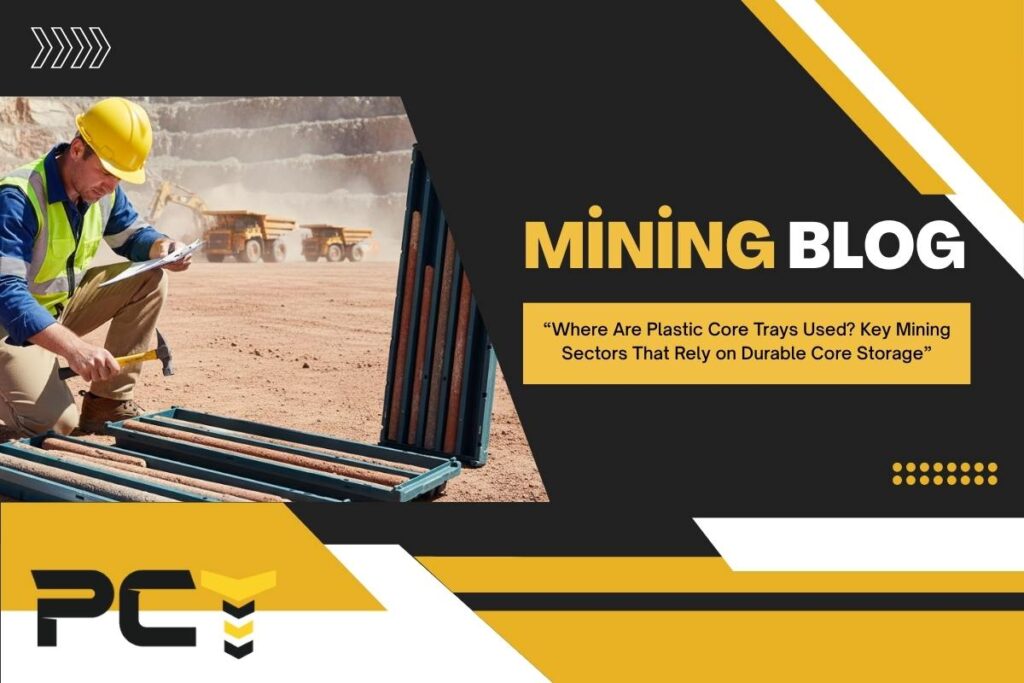
Plastic core trays play a vital role in the global mining and exploration industry, offering reliable support in the preservation, storage, and transport of geological samples. Their growing popularity across various mineral sectors is driven by their durability, reusability, and field-ready design that withstands harsh environmental conditions.
Why Core Trays Are Essential in Modern Mining
Core sampling is the backbone of mineral exploration and resource evaluation. The way these samples are stored has a direct impact on the accuracy of logging, the safety of handling, and the integrity of data over time.
Plastic core trays stand out by combining lightweight design with heavy-duty performance. Unlike wooden trays, they resist moisture and decay. Compared to metal trays, they don’t corrode and are easier to handle in extreme temperatures. Their standard sizing and stackability support better workflow and organization in busy exploration camps.
Gold Exploration & Mining
Gold is one of the most actively explored and mined commodities worldwide, with projects spanning continents. In gold exploration, core trays are used extensively to store and protect valuable core samples during both the drilling and laboratory analysis stages.
Durability is crucial, as gold exploration often occurs in regions with harsh climates—such as the arid zones of Western Australia, the high-altitude Andes in Peru, or the intense heat of South Africa. UV-resistant plastic trays are preferred here due to their ability to withstand sun exposure, while drainage channels prevent moisture buildup during storage.
Common tray sizes include HQ and NQ, depending on the borehole diameter and sampling methodology. These trays help ensure that samples are stored without compression, breakage, or cross-contamination.
Copper Exploration
Copper mining occurs in some of the world’s most rugged terrains, from the mountainous Atacama Desert in Chile to the copper belts of Zambia and Mongolia. These conditions require core trays that can endure tough transportation routes and mechanical stress.
Plastic trays with reinforced edges and robust handles support safe movement across rocky paths and long field transport. Their ability to resist deformation ensures that heavy copper-bearing core remains intact from drill site to lab.
Core labeling is also critical in copper projects that run multiple drill rigs and sampling phases. The clean, writable surfaces on plastic trays improve identification and reduce logging errors.
Lithium Projects (Battery Metals)
As the demand for battery metals like lithium increases, exploration expands to remote areas in Argentina, Australia, and Canada. Here, the priority is often speed, lightweight equipment, and low environmental impact.
Lithium core tends to be softer than other rock types, making gentle handling a must. Plastic trays with stable internal supports and non-abrasive surfaces reduce damage to core integrity.
Additionally, exploration sites in salt flats or humid environments benefit from water-resistant plastic trays, which don’t degrade or warp due to brine or moisture exposure.
Rare Earths and Critical Minerals
Rare earth elements like neodymium and cobalt are essential to modern technology and green energy. These projects usually involve low-volume, high-value drilling with strong documentation requirements.
Plastic core trays support these needs by offering custom-colored options for sample segregation, long-term durability, and sustainability benefits aligned with the ESG targets many critical mineral projects pursue.
Given their remote locations—like northern Canada or central Africa—the lightweight, nestable design of plastic trays simplifies international transport and stacking in mobile labs.
Iron Ore & Bulk Commodities
Iron ore and other bulk minerals require equipment that can handle large volumes and high-density samples. Core trays for these sectors must be both sturdy and easy to manage.
Plastic trays designed for bulk use feature thick sidewalls, built-in drainage, and UV protection. In wetter climates like Brazil or West Africa, avoiding waterlogging is vital, and plastic outperforms metal and wood due to its corrosion resistance.
For logistics, stackable plastic trays optimize space during transport and reduce labor effort when organizing multiple drilling runs in rapid succession.
Uranium and Radiometric Core Storage
Projects involving radioactive materials like uranium must meet strict safety and labeling standards. Plastic core trays are well-suited due to their chemical resistance and non-reactive nature.
Unlike metal, plastic does not corrode under radiometric exposure. It also allows for permanent ink marking, ensuring traceability in long-term archival conditions.
In countries such as Namibia and Kazakhstan, plastic trays are used to store high-value cores in both active exploration and regulatory storage conditions.
Environmental and Geotechnical Drilling
Outside of mining, core trays are widely used in infrastructure and geotechnical projects. These include tunnel construction, dam development, road engineering, and land surveys.
Plastic trays serve as the go-to solution for storing soil cores and structural samples. Their non-toxic composition and recyclability make them ideal for projects near urban centers or protected ecosystems.
Additionally, trays help geologists maintain clear core orientation, layer integrity, and stratigraphic records, which are critical for project safety assessments.
Plastic core trays have become the standard in exploration and mining projects around the world—not just for their ruggedness, but for their adaptability and sustainability.
Whether used for storing delicate lithium samples or dense iron ore cores, they enable field teams to operate efficiently, protect valuable geological data, and comply with environmental commitments.