


Africa’s Mineral Wealth and the Critical Role of Core Trays
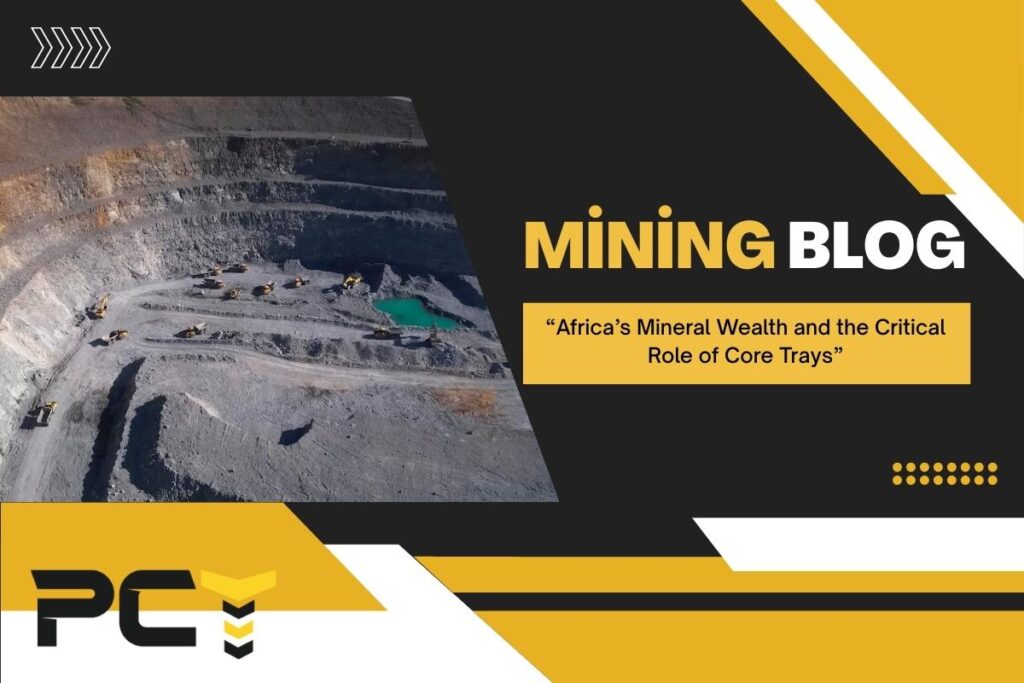
Africa is home to vast mineral resources – roughly 30% of the world’s known mineral reserves. From the historic “Gold Coast” to its modern battery metals, the continent boasts leading production of critical commodities. Key examples include:
- Gold (Ghana, South Africa): Ghana is currently Africa’s largest gold producer, having mined about 4.9 million ounces (136 tonnes) in 2024. South Africa also has a long legacy of gold mining and remains a top global producer.
- Diamonds (Botswana, Angola): Botswana and Angola are Africa’s diamond giants. Angola recently overtook Botswana as the continent’s largest diamond producer by value, reflecting booming output. Together, these two countries (plus South Africa) account for much of global diamond supply.
- Cobalt & Copper (Democratic Republic of Congo, DRC): The DRC dominates the world’s cobalt output (≈74% of global mine production) and is a top copper miner. Chinese-backed companies there produced over 650,000 tonnes of copper and 114,000 tonnes of cobalt in 2024. These metals are vital for batteries and clean-energy technologies.
- Platinum (South Africa): South Africa holds the lion’s share of the world’s platinum-group metals (PGM). It contains over three-quarters of global platinum reserves, making it a critical PGM hub.
- Lithium (Zimbabwe): Zimbabwe is Africa’s leading lithium producer. Its spodumene exports surged 30% in early 2025, amid growing global EV battery demand. Chinese investment has poured into Zimbabwe’s lithium sector, and the government plans to ban raw lithium exports by 2027 to boost local refining.
These resources fuel industries worldwide. For example, Africa supplies significant shares of global reserves in cobalt, diamonds, platinum, etc. – highlighting its role in global supply chains.
Global Importance of African Mining
African mining is increasingly strategic for the world economy. Critical minerals like cobalt, lithium, nickel and rare-earths are essential for electric vehicles, batteries, wind turbines and high-tech devices. The International Energy Agency (IEA) forecasts that clean-energy demand will multiply metal production (e.g. lithium demand ×5 by 2040). Southern Africa alone contains about one-third of the planet’s critical mineral reserves, so investment here helps power the global energy transition.
Major powers are competing to secure these resources. China leads with tens of billions in African mining projects: in 2023 its Belt and Road Initiative investments in Africa totaled $21.7 billion, with $8–10 billion focused on critical minerals. By contrast, U.S. critical-mineral investment in Africa remains small (under $300 million in 2023). Europe is also stepping up: the EU has launched a Critical Raw Materials Act and partnerships to diversify supplies beyond China. All this reflects the race to shore up supply chains for electric vehicles, renewable energy and defense industries.
Meanwhile, ESG (Environmental, Social, Governance) pressures are shaping the landscape. Mining companies now rank ESG concerns as the top risk to their business. Investors and activists demand transparency on environmental damage and human rights. African governments have responded with new mining codes, value-add requirements and export bans on unprocessed minerals. For instance, countries like Ghana and Tanzania have restricted raw mineral exports, and the DRC has reviewed contracts to ensure promised social investments were delivered. In short, the world’s demand for Africa’s minerals is colliding with higher standards for sustainable and ethical mining.
Challenges in African Mining
Despite its riches, Africa’s mining sector faces significant hurdles:
- Political instability and resource nationalism: Frequent elections across Africa can lead to abrupt policy shifts. In 2024 alone, about 18 African nations held national elections, and many new governments sought greater resource control. This has led to mining code overhauls, contract renegotiations, and even sudden export bans. Such political risk drives up uncertainty for mining investors.
- Infrastructure deficits: Many mineral regions lack reliable roads, railways, ports, power and water. Transporting ore or supplies over poor infrastructure raises costs and delays projects. Inadequate electrical power and water supply for processing can hinder operations. These logistical bottlenecks are often cited as a major economic hurdle for African mining.
- Environmental and climate issues: Mining can cause land degradation, deforestation, and water pollution. Communities often worry about damage to agriculture or wildlife around mines. Climate change is also affecting mining operations – for example, water scarcity and extreme weather events can disrupt production. Regulators and NGOs are pressing companies to improve environmental stewardship. In many cases, stricter regulations (e.g. for tailings dams or emissions) add new costs to operations.
- Social and human-rights concerns: Artisanal and informal mining persists in many areas, often outside any regulation. Issues like child labor (notoriously in some DRC cobalt mines), worker safety, and equitable community benefits remain critical. Transparency is another challenge: opaque contract terms or underreporting of production can fuel mistrust. In response, global initiatives like the Kimberley Process (for diamonds) and due diligence regulations in the EU and US are pushing African mining towards higher labor and governance standards.
These challenges do not deter investment altogether, but they require companies to be adaptive: securing political risk insurance, partnering with local governments, and investing in community programs and greener technologies.
The Role of Core Trays in African Exploration
Secure core sample storage is a cornerstone of mineral exploration. When drill rigs extract cylindrical rock cores underground, each metre of core must be preserved for analysis. Storing these samples safely – especially in harsh African field conditions – is where plastic core trays play a critical role.
Core samples collected from drilling are fragile and must be handled carefully. Sturdy plastic core trays provide UV- and water-resistant storage, as they are often made from durable recycled polymers. These trays are typically stackable and lightweight, allowing exploration teams to transport thousands of metres of core efficiently. Premium plastic trays feature reinforced rib designs and secure lids for extra impact resistance in rugged conditions. For example, modern trays can hold multiple 1 m core sections and interlock securely to prevent shifting or breakage.
Moreover, plastic core trays contribute to sustainability in exploration. Many are made from recycled high-density plastics. Unlike wooden boxes or disposable containers, recycled plastic trays have a long service life and are reusable. Using recycled materials reduces waste and the carbon footprint of exploration activities. In summary, by protecting valuable core samples and meeting environmental standards, plastic core trays are an eco-friendly core storage solution that meets the needs of Africa’s modern drilling programs.
Future Outlook
The long-term outlook for African mining is robust. As global demand for minerals grows, Africa is poised to play an even larger role in supply chains. Southern Africa’s enormous resource base (nearly one-third of global critical reserves) means it will remain in the spotlight. The International Energy Agency and other analysts project continued surges in demand – for example, lithium demand alone could quintuple by 2040.
A significant pipeline of African projects is still awaiting development: one study estimates over $9 billion in critical mineral projects are in planning stages, though less than 10% have secured finance. If investment and infrastructure improve, many of these mines could move forward. Increased exploration drilling is likely as prices and demand climb.
For exploration companies, this means growing demand for reliable core storage solutions. Safe, durable core trays will be needed to handle larger drilling campaigns in remote African terrains. Meanwhile, sustainability trends will favor trays made from recycled and long-lasting plastics.
In sum, Africa’s mineral wealth – from gold and diamonds to battery metals – continues to attract global interest. The continent’s mining sector faces challenges (political risk, infrastructure, ESG issues) but also enormous opportunities. Innovative solutions like eco-friendly plastic core trays are now an essential part of modern exploration, helping ensure that Africa’s critical minerals can be discovered and developed responsibly for decades to come.